Rover’s Secret Children: Why Neutering Matters
Rover was a loved Labrador who always came home after his evening adventures. But somewhere in the city, his puppies were born into cardboard boxes and uncertain futures. This story asks pet parents to rethink freedom, masculinity and the responsibility of neutering.
Clear answers, fixed package context, and grooming advice that matches how pet parents actually search before booking.
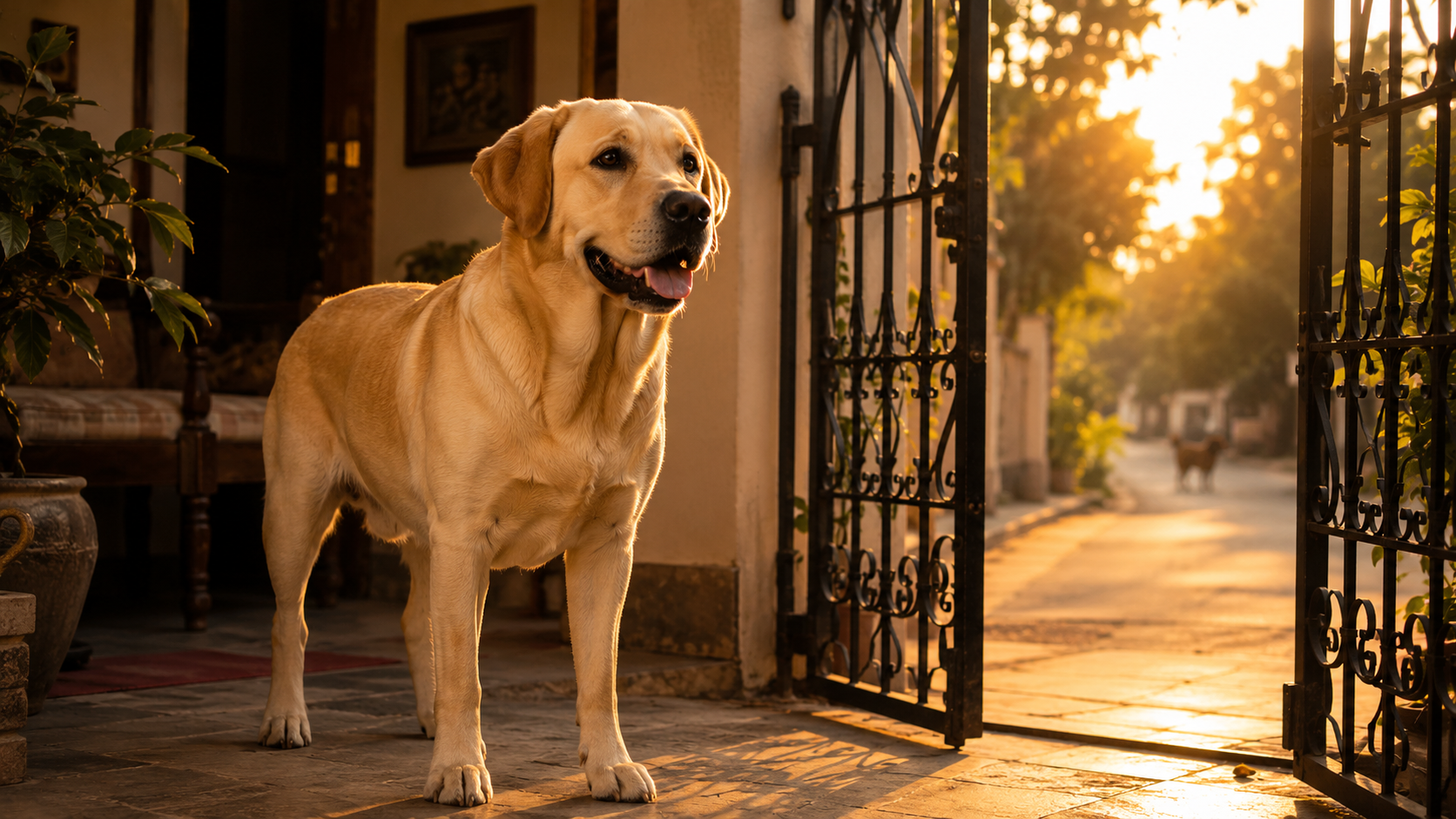
Rover was the kind of dog people stopped to admire.
Even people who claimed to like cats more.
He was a handsome Labrador with a sunlit coat, a confident walk and the kind of face that made strangers smile. His family adored him. He had long drives, treats, photoshoots, a favourite sofa that slowly stopped being white, and the unquestioned status of being not just a pet, but a child of the house.
In the evenings, the gate was sometimes left ajar.
Rover would slip out.
His family did not worry too much because he always came back.
He knew the lanes. He knew the smells. He knew where to run, where to sniff, where to disappear for a while before bounding back home with the satisfied look of a dog who had lived a full second life before dinner.
To his family, it was freedom.
To Rover, it was adventure.
But somewhere else in the city, a few months later, that freedom had a consequence.
A damp cardboard box.
A litter of patchy puppies.
Eyes barely open.
Paws too large for bodies too small.
Whimpers lost under traffic, rain and city noise.
One of them could have been his.
This is the story of Rover’s secret children. And why dog neutering matters.
Rover was the kind of dog people stopped to admire.
Even people who claimed to like cats more.
He was a handsome Labrador with a sunlit coat, a confident walk and the kind of face that made strangers smile. His family adored him. He had long drives, treats, photoshoots, a favourite sofa that slowly stopped being white, and the unquestioned status of being not just a pet, but a child of the house.
In the evenings, the gate was sometimes left ajar.
Rover would slip out.
His family did not worry too much because he always came back.
He knew the lanes. He knew the smells. He knew where to run, where to sniff, where to disappear for a while before bounding back home with the satisfied look of a dog who had lived a full second life before dinner.
To his family, it was freedom.
To Rover, it was adventure.
But somewhere else in the city, a few months later, that freedom had a consequence.
A damp cardboard box.
A litter of patchy puppies.
Eyes barely open.
Paws too large for bodies too small.
Whimpers lost under traffic, rain and city noise.
One of them could have been his.
This is the story of Rover’s secret children. And why dog neutering matters.
Quick answer: Why does dog neutering matter?
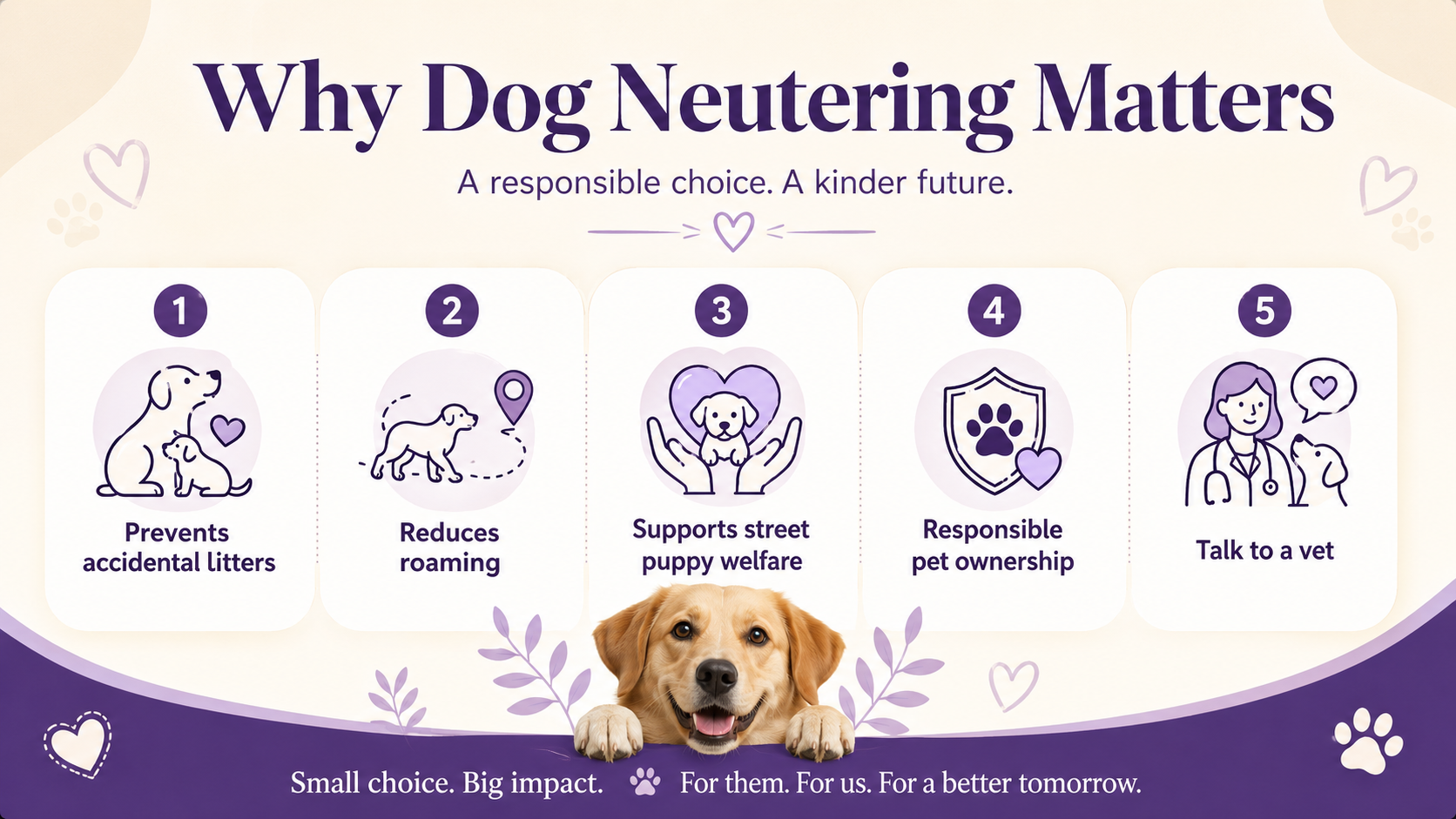
Dog neutering matters because one unneutered male dog can father multiple accidental litters, especially if he is allowed to roam. Neutering helps reduce unwanted puppies, street dog suffering, mating-related roaming, and some behaviour and health risks.
For pet parents, neutering is not only a private decision about one dog. If an unneutered male dog has access to female dogs outside the home, that decision can affect many puppies who may never find safe homes.
| Neutering concern | Why it matters |
|---|---|
| Accidental litters | Prevents unwanted puppies from being born into unsafe conditions |
| Roaming | May reduce mating-driven wandering in some dogs |
| Street puppy welfare | Helps reduce suffering and abandonment |
| Responsible ownership | Prevents one pet’s freedom from creating vulnerable lives |
| Public safety | Can reduce mating-related conflicts and chasing |
| Long-term planning | Helps families make informed choices with a veterinarian |
This article is based on an animal welfare story and is not a substitute for veterinary advice. If you are considering neutering your dog, speak to a qualified veterinarian about the right age, health factors, procedure, recovery, risks and benefits for your individual pet.
Meet Rover: Loved, spoiled and free
Rover was not neglected.
That is what makes this story important.
He was loved.
He had a family. He had food, comfort, attention and affection. He had humans who saw him as part of the household. He was not a street dog wandering because no one cared.
He was cared for deeply.
And yet, every evening he was allowed to wander.
That is where many pet parents misunderstand responsibility.
A loved dog can still create harm if his freedom has no boundaries.
An adored unneutered male dog can still father puppies no one is prepared to raise.
Rover did not understand consequences. He only followed instinct.
The responsibility belonged to the humans who loved him.
The puppies no one planned for
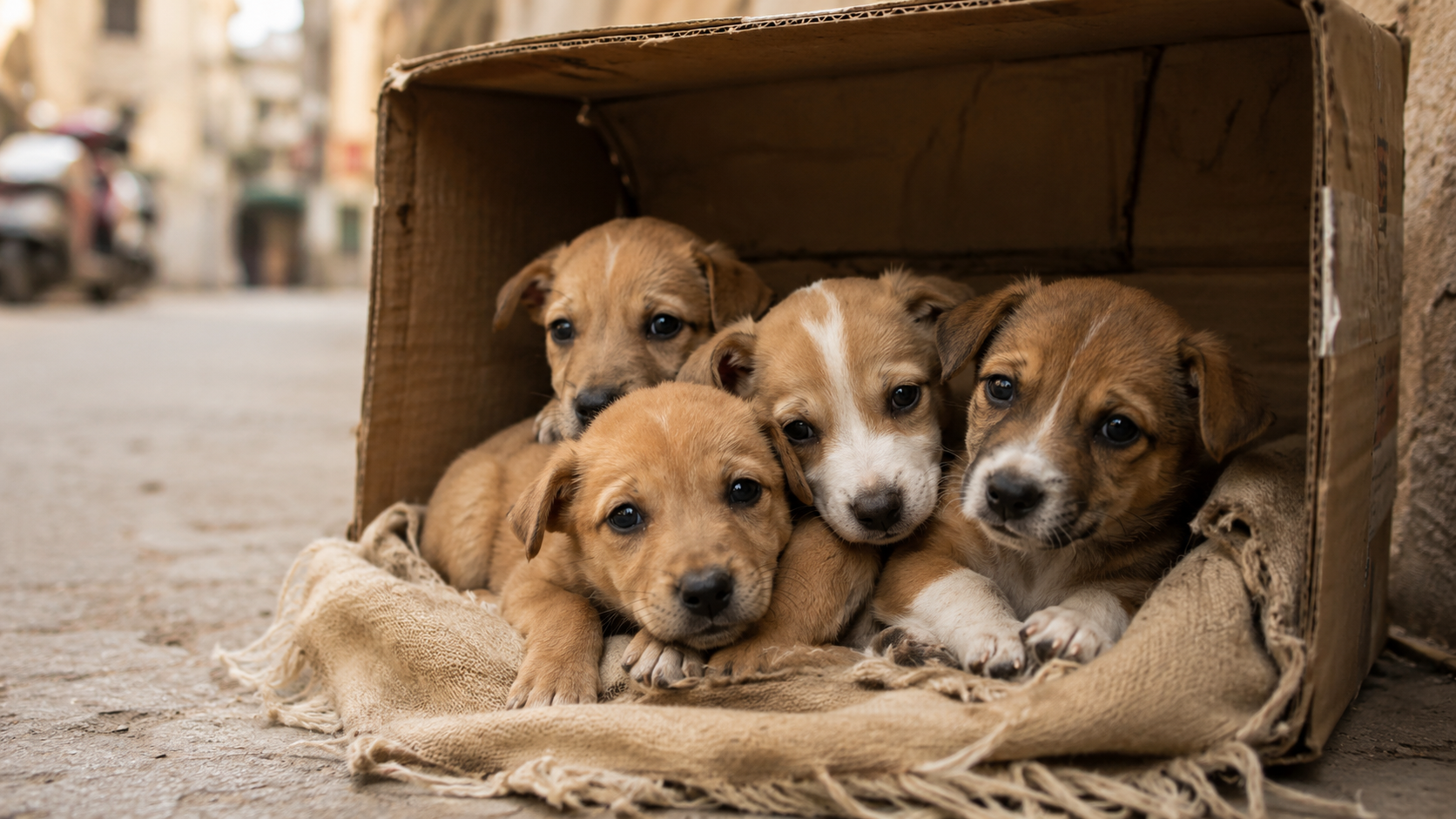
A few months after Rover’s evening adventures, there were puppies.
Not in a warm bed.
Not under a watchful mother in a safe home.
Not with a family waiting to choose names.
In a cardboard box.
Patchy, shivering, half-aware of a world that had not made space for them.
This is the part many pet parents never see.
When an unneutered male dog roams, the consequences may not appear inside his own house. His family may never know if he mates. They may never see the pregnant female. They may never meet the litter.
But the puppies exist.
Some may be adopted. Some may survive on the street. Some may fall sick. Some may be abandoned. Some may not make it through the night.
An accidental litter is not invisible just because the pet parent does not witness it.
A letter from Rover’s child
Dear Rover’s human friend,
I am sure you do not hate me.
You probably do not even know I exist.
When you brought Rover home, you may have imagined chew toys, loud barks at the doorbell, long walks, loyalty and a dog who looked perfect in family photographs.
You probably did not imagine a litter of puppies scattered across the city.
But here we are.
I think I look like him.
The same ears turned slightly inward. The same crooked tail. The same soft eyes.
Only my world is different.
Rover sleeps on a sofa.
I sleep where the rain does not reach me, if I am lucky.
Rover has a bowl.
I learn quickly that food belongs to whoever reaches it first.
Rover is called home.
I am chased away from doorways.
It is not Rover’s fault.
He follows instinct when the gate is open. How could he know that his freedom can become our beginning? How could he understand that one unneutered male dog can father litter after litter?
But you could.
And maybe now you will.
Neutering is not about blame
This story is not written to shame pet parents.
Most people who avoid neutering their dogs are not cruel. Many are misinformed, unsure or influenced by myths.
Some worry their dog will become weak.
Some believe a male dog should remain “masculine.”
Some think neutering will change the dog’s personality.
Some assume one dog cannot make much difference.
Some delay the decision until it feels irrelevant.
But neutering is not about guilt.
It is about responsibility.
It is about understanding that a pet parent’s choices can ripple outward into the lives of animals they may never meet.
Rover’s family did not plan for street puppies.
But lack of planning can still create them.
Can one unneutered male dog really make a difference?
Yes.
One unneutered male dog can mate with multiple female dogs if he is allowed to roam. Unlike a female dog, whose pregnancies are physically visible, the male dog’s role often stays hidden.
This makes it easier for pet parents to ignore.
A female dog’s litter becomes obvious.
A male dog’s litters may be scattered across neighbourhoods.
That is why neutering male dogs matters.
It is not only female dogs who need sterilization for population control. Male dogs are part of the same cycle.
When male pet dogs are allowed to roam unneutered, they can contribute to accidental pregnancies, street puppy suffering and already overburdened rescue systems.
The myth of masculinity in male dogs
One of the most common reasons pet parents avoid neutering male dogs is the idea that neutering takes away their masculinity.
But dogs do not understand masculinity the way humans do.
A dog does not measure identity through reproductive ability.
A dog does not feel less loved, less strong or less alive because he is neutered.
Rover was admired for his beauty, strength and personality. Neutering would not have taken away the things his family loved most about him.
He would still have been Rover.
Still handsome.
Still loyal.
Still dramatic.
Still sprawled across the sofa like it belonged to him.
What neutering could have changed was not his worth.
It could have changed the story of the puppies who came after him.
Will neutering stop a dog from growing well?
Many pet parents worry that neutering will stop their dog from growing properly, especially in larger or pedigreed breeds.
This is a question to discuss with a veterinarian because the right timing can depend on breed, size, health, age and development.
But the fear that neutering automatically makes a dog weak, incomplete or unhealthy is not a good reason to avoid the conversation altogether.
Responsible neutering is not a casual decision. It should be planned with veterinary guidance.
Ask your vet:
- What is the right age for my dog?
- Should large-breed timing be considered?
- What are the benefits for my dog?
- What are the possible risks?
- How long is recovery?
- What should I expect after surgery?
- Will diet or exercise need adjustment?
- How do I prevent weight gain after neutering?
Good decisions begin with accurate information, not fear.
Does neutering change a dog’s personality?
Many pet parents worry that neutering will make their dog dull, sad or less loving.
In most cases, the dog’s core personality remains the same.
A playful dog does not stop being playful because he is neutered. A loving dog does not stop loving his family. A goofy dog does not lose his goofiness.
Some mating-related behaviours may reduce over time, especially if they are linked to hormones.
These may include:
- Roaming in search of females
- Mounting
- Marking
- Mating-related frustration
- Some forms of aggression linked to competition
- Escaping when females nearby are in heat
Behaviour changes vary from dog to dog. Training, routine, exercise and environment still matter.
Neutering is not a magic behaviour cure, but it can be part of responsible long-term care.
What are the benefits of neutering male dogs?
Neutering can offer both welfare and practical benefits when done at the right time under veterinary guidance.
Potential benefits may include:
- Preventing accidental litters
- Reducing contribution to street puppy populations
- Reducing mating-driven roaming in some dogs
- Lowering risk of some reproductive health issues
- Reducing some hormone-driven behaviours
- Helping families manage long-term care responsibly
The biggest benefit in Rover’s story is not theoretical.
It is the puppies who would not have been born into uncertainty.
Preventing suffering is a form of care too.
What neutering does not replace
Neutering is important, but it does not replace good pet parenting.
A neutered dog still needs:
- Exercise
- Training
- Enrichment
- Grooming
- Veterinary care
- A safe home
- Good nutrition
- Supervision
- Love and structure
Neutering does not mean a dog can be ignored.
It is one part of responsible ownership, not the whole of it.
Freedom without supervision is not harmless
Many families allow dogs to roam because the dog “always comes back.”
But coming back is not the only measure of safety.
An unsupervised dog may:
- Mate with street dogs
- Get injured
- Chase vehicles
- Get into fights
- Eat unsafe food
- Get lost
- Bite or scare someone
- Be harmed by people
- Pick up ticks, fleas or infections
- Create accidental litters
A dog’s freedom should not come at the cost of another animal’s suffering.
Supervised walks, safe playtime and enclosed spaces are better than open wandering.
Responsible pet ownership is bigger than one home
It is easy to think of pet care as something that happens inside the home.
Food in the bowl.
A bed in the corner.
Vaccinations.
Walks.
Photos.
But responsible pet ownership also includes what happens outside the gate.
If your dog interacts with the world, your choices affect the world.
Rover’s family loved him deeply. But love without responsibility can still leave consequences behind.
Responsible ownership asks:
- Is my dog safely supervised?
- Is my dog neutered or responsibly managed?
- Could my dog contribute to accidental litters?
- Am I preventing harm beyond my own home?
- Do I understand my pet’s instincts?
- Am I making decisions based on facts or myths?
A pet parent does not need to be perfect.
But they do need to be aware.
Why neutering matters in India
In India, animal welfare realities are visible everywhere.
Street dogs, abandoned puppies, overburdened shelters, limited foster homes and rescue groups stretched beyond capacity are part of the landscape.
Every accidental litter adds pressure to a system already struggling.
Many puppies born on the street face:
- Hunger
- Disease
- Parasites
- Traffic accidents
- Weather exposure
- Human cruelty
- Separation from the mother
- Lack of vaccination
- Low survival chances
Neutering owned dogs is one practical way pet parents can reduce accidental litters and support wider animal welfare.
This is not only a street dog issue.
Owned unneutered dogs who roam can become part of the same problem.
When should you talk to a vet about neutering?
Pet parents should speak to a veterinarian early, preferably before the dog reaches sexual maturity.
The right timing depends on the dog’s age, breed, size, health and lifestyle.
Some dogs may be neutered earlier. Some large-breed dogs may require timing discussions. Some medical conditions may affect the decision.
Do not rely only on WhatsApp advice, neighbourhood opinions or myths.
Ask a qualified vet.
A good vet can explain:
- Ideal timing
- Pre-surgery checks
- Anaesthesia safety
- Recovery period
- Pain management
- Activity restriction
- Wound care
- Diet adjustments
- Behaviour expectations
- Long-term health considerations
Neutering should be planned, not feared.
What to expect after neutering
Recovery after neutering varies by dog, but most dogs need rest, monitoring and follow-up care.
Your vet may advise:
- Limiting running and jumping
- Preventing licking at the incision
- Using an e-collar or recovery suit
- Giving prescribed medicines on time
- Keeping the area clean and dry
- Watching for swelling, bleeding or discharge
- Attending follow-up appointments
- Adjusting food or activity if needed
Always follow your veterinarian’s instructions.
Do not rush recovery because your dog seems energetic. Healing still takes time.
The emotional side of neutering
Some pet parents feel emotional about neutering.
That is understandable.
It can feel like a big decision. It may bring up discomfort, fear or guilt.
But responsible care sometimes means making decisions your pet cannot understand but benefits from.
Vaccination is like that.
Leash safety is like that.
Medical treatment is like that.
Neutering can be like that too.
The question is not whether the decision feels emotionally easy.
The question is whether it prevents suffering and supports responsible care.
What Rover’s child wants us to understand
Dear Rover’s human friend,
I do not blame you.
I do not think you meant for me to be born under a sky with no roof.
I do not think you imagined me shivering in a box while Rover slept under a blanket.
But every choice made for him shaped the beginning of my life.
The open gate.
The evening freedom.
The decision not to neuter.
The belief that one dog’s wandering was harmless.
Maybe you did not know.
But now you do.
And perhaps next time the gate opens, the story will start differently.
What this story means to All Tails
At All Tails, we believe pet care is not only about how loved an animal is inside a home.
It is also about the responsibility that love creates.
That responsibility includes grooming, hygiene, comfort, safety, vet care, nutrition, supervision and decisions that prevent suffering beyond our own pets.
Rover’s story is a reminder that a beautiful, loved dog can still affect lives his family never sees.
Responsible pet parenting is not guilt.
It is awareness turned into action.
Final thought: Count them too
When Rover curls up at his family’s feet, he is loved.
That love is real.
But somewhere in the city, there may be puppies with his ears, his tail, his eyes and none of his safety.
The point is not to love Rover less.
It is to love more responsibly.
To count not only the joyful bark at home, but the softer cries outside it.
To understand that one open gate can become many uncertain lives.
And to choose differently before the next story begins.
Quick answers before you book
Why does dog neutering matter?
Dog neutering matters because one unneutered male dog can father multiple accidental litters if allowed to roam. Neutering helps reduce unwanted puppies, street dog suffering and mating-related wandering.
Should I neuter my male dog?
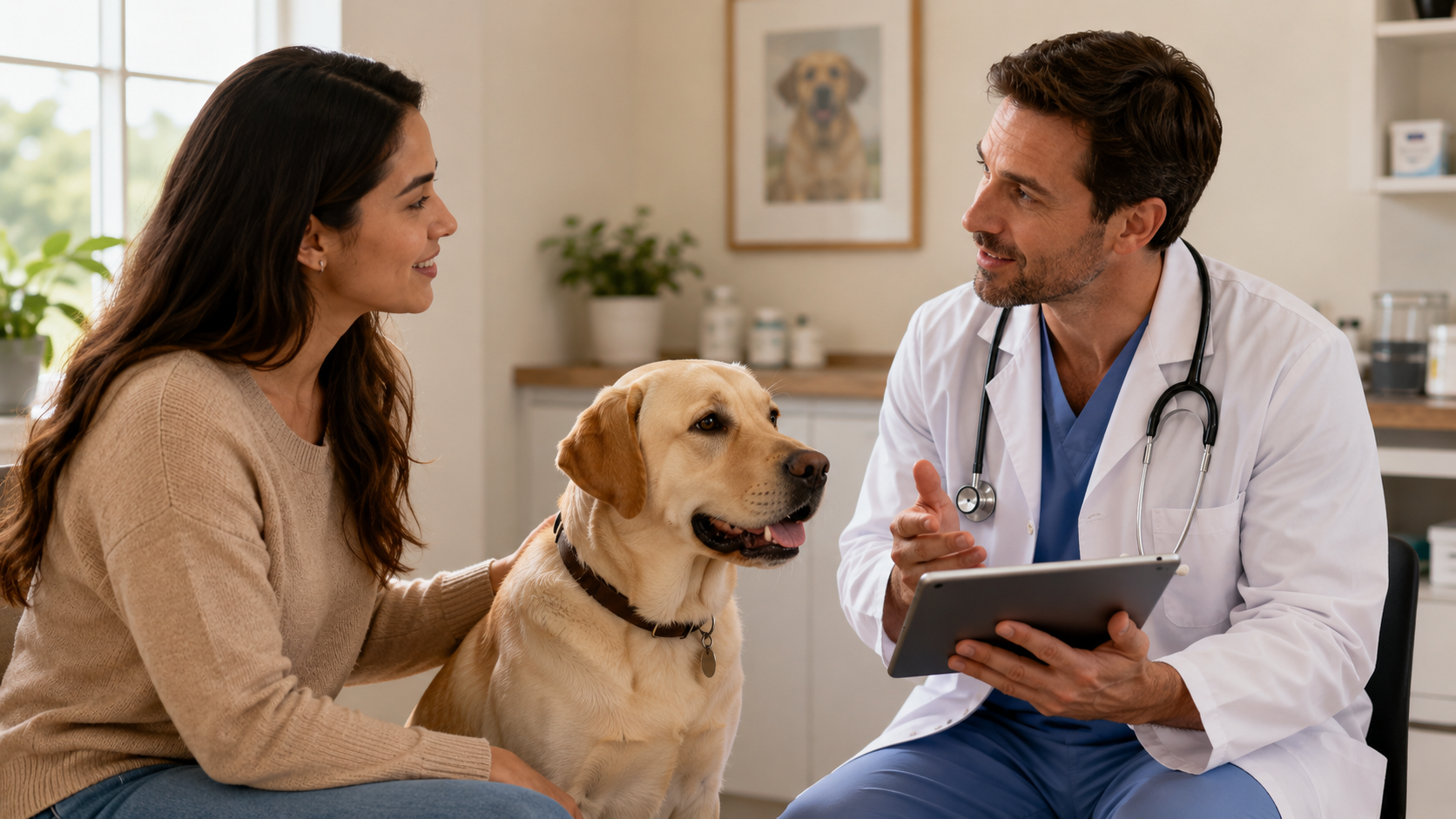
You should discuss neutering with a qualified veterinarian. The right decision and timing depend on your dog’s age, breed, size, health and lifestyle.
Can one unneutered male dog cause accidental litters?
Yes, one unneutered male dog can mate with multiple female dogs and father multiple litters, especially if he is allowed to roam unsupervised.
Does neutering change a dog’s personality?
A dog’s core personality usually remains the same. Some hormone-driven behaviours such as roaming, marking or mating-related frustration may reduce, but behaviour varies from dog to dog.
Will neutering stop my dog from growing properly?
The right timing of neutering should be discussed with a veterinarian, especially for large breeds. Pet parents should not rely on myths and should ask a vet about growth, health and timing.
Is neutering only important for female dogs?
No, male dogs are also part of accidental litters. Neutering male dogs helps prevent unwanted pregnancies and reduces the number of puppies born into unsafe conditions.
Is it safe to let an unneutered male dog roam if he always comes back?
No, unsupervised roaming can lead to accidental litters, injuries, fights, traffic accidents, infections, ticks, fleas or other risks. Coming back home does not mean the roaming was harmless.
What are the benefits of neutering male dogs?
Potential benefits may include preventing accidental litters, reducing mating-driven roaming, lowering some reproductive health risks and reducing some hormone-related behaviours.
When should I talk to a vet about neutering?
Pet parents should speak to a veterinarian early, preferably before the dog reaches sexual maturity. The vet can advise the right timing based on breed, size, health and lifestyle.
What should I expect after neutering?
After neutering, dogs usually need rest, restricted activity, incision monitoring, medicines if prescribed and follow-up care. Always follow your vet’s recovery instructions.
Why is neutering important in India?
Neutering is important in India because many puppies are born into unsafe street conditions, shelters are overburdened and accidental litters add to animal welfare challenges.
What does Rover’s story teach pet parents?
Rover’s story teaches that loving a dog also means taking responsibility for the consequences of his freedom. Neutering and supervision can prevent suffering that pet parents may never personally see.
Our editorial team consists of professional pet groomers and pet-care researchers who write clear, practical guides based on real grooming sessions across Delhi NCR, Chandigarh Tricity, and Dehradun.
Leave the grooming to us.
Trained groomers at your home — packages from ₹999. Pay online or after the session.
More guides in the same flow
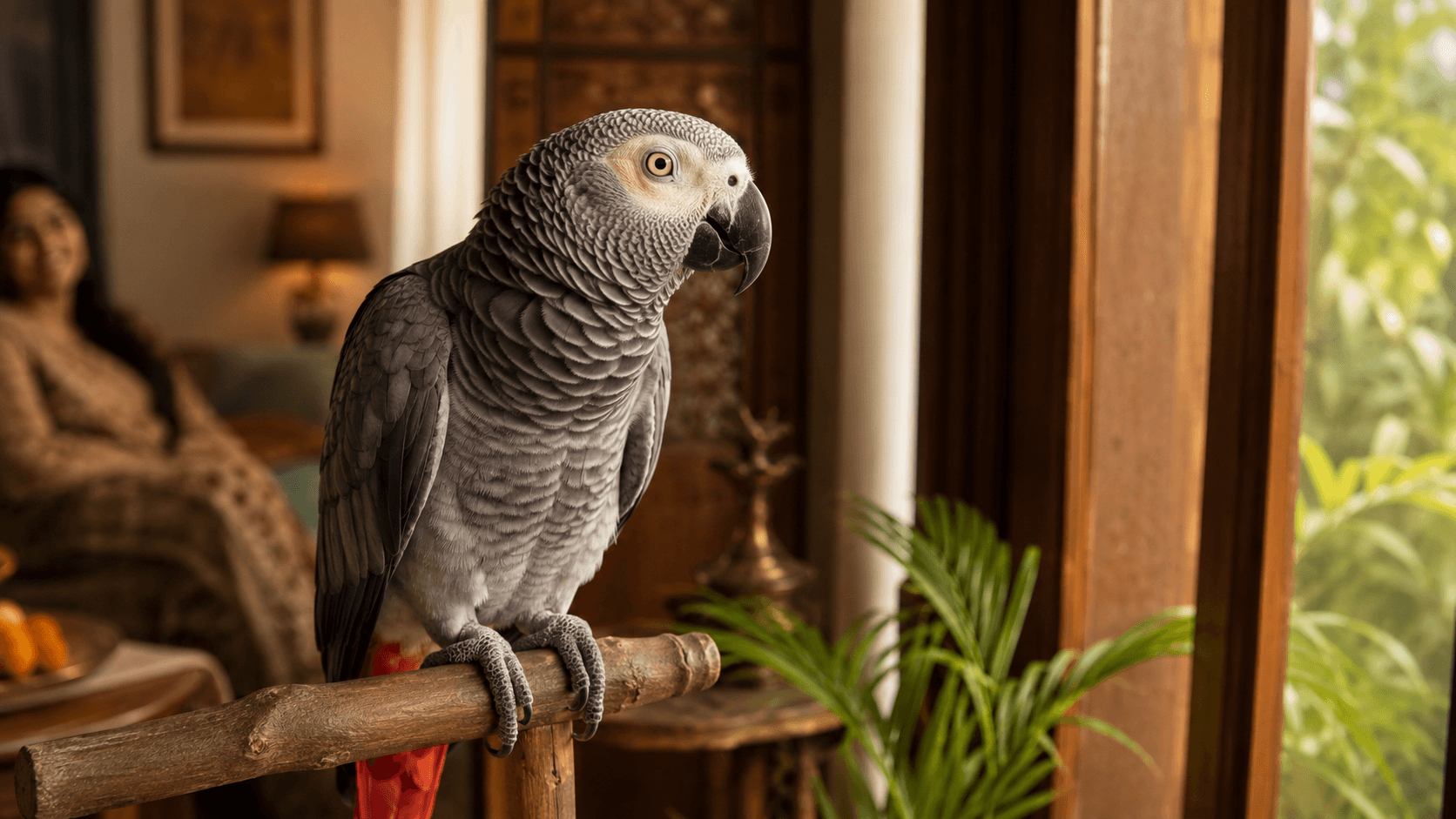
What an African Grey Parrot Taught Us About Exotic Pet Care in India
Michelle the African Grey parrot was never just a pet. Her story is a moving reminder that exotic pet care in India requires patience, better diet, avian vet care, social learning and the humility to keep learning from the animals we love.
Open guide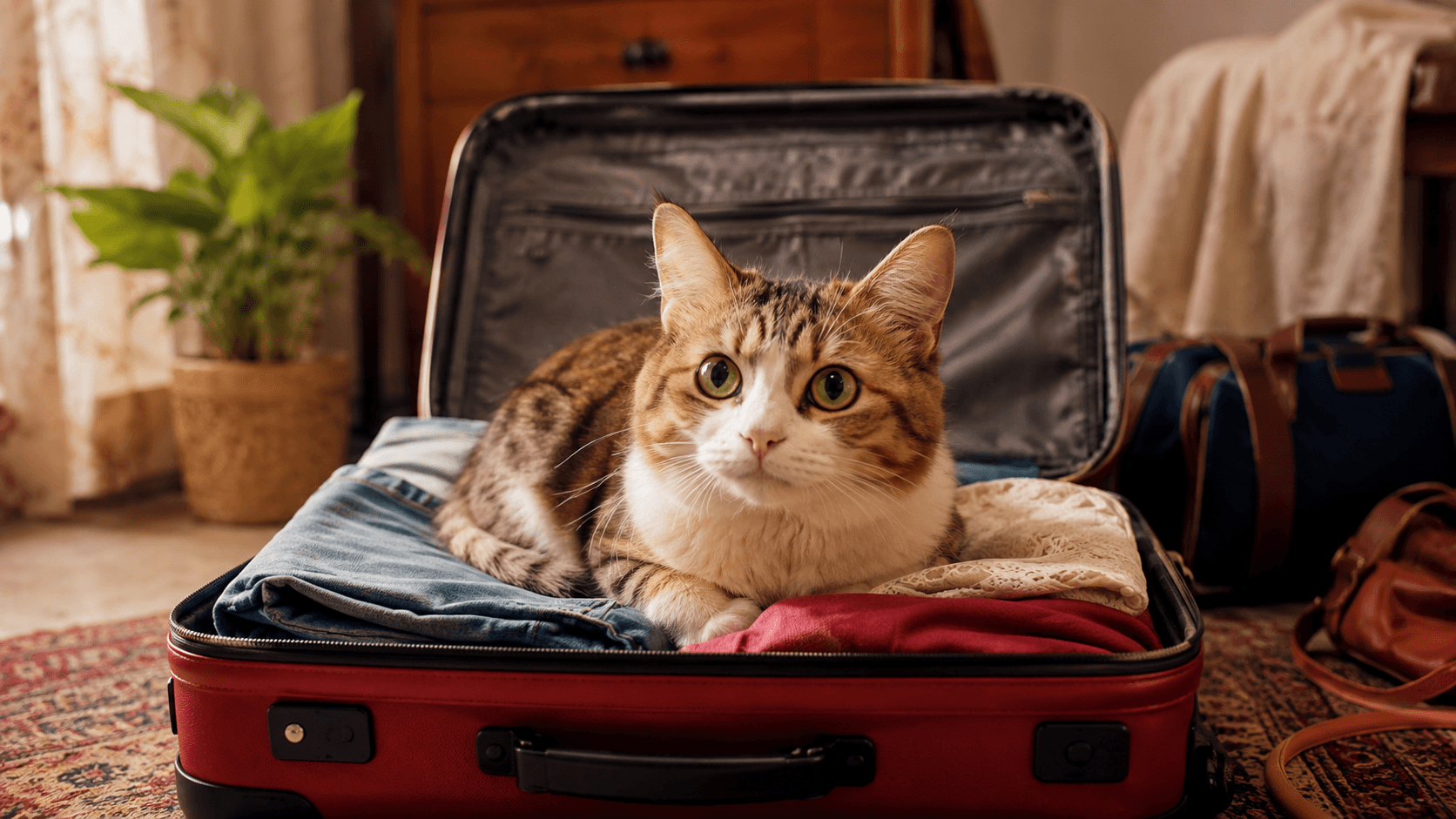
The Suitcase Cat: Understanding Cat Anxiety and Travel Stress
Luna the cat used to hide inside suitcases before every family trip. Her story is a gentle reminder that cat anxiety is not stubbornness — it is often a request for safety, routine and reassurance.
Open guide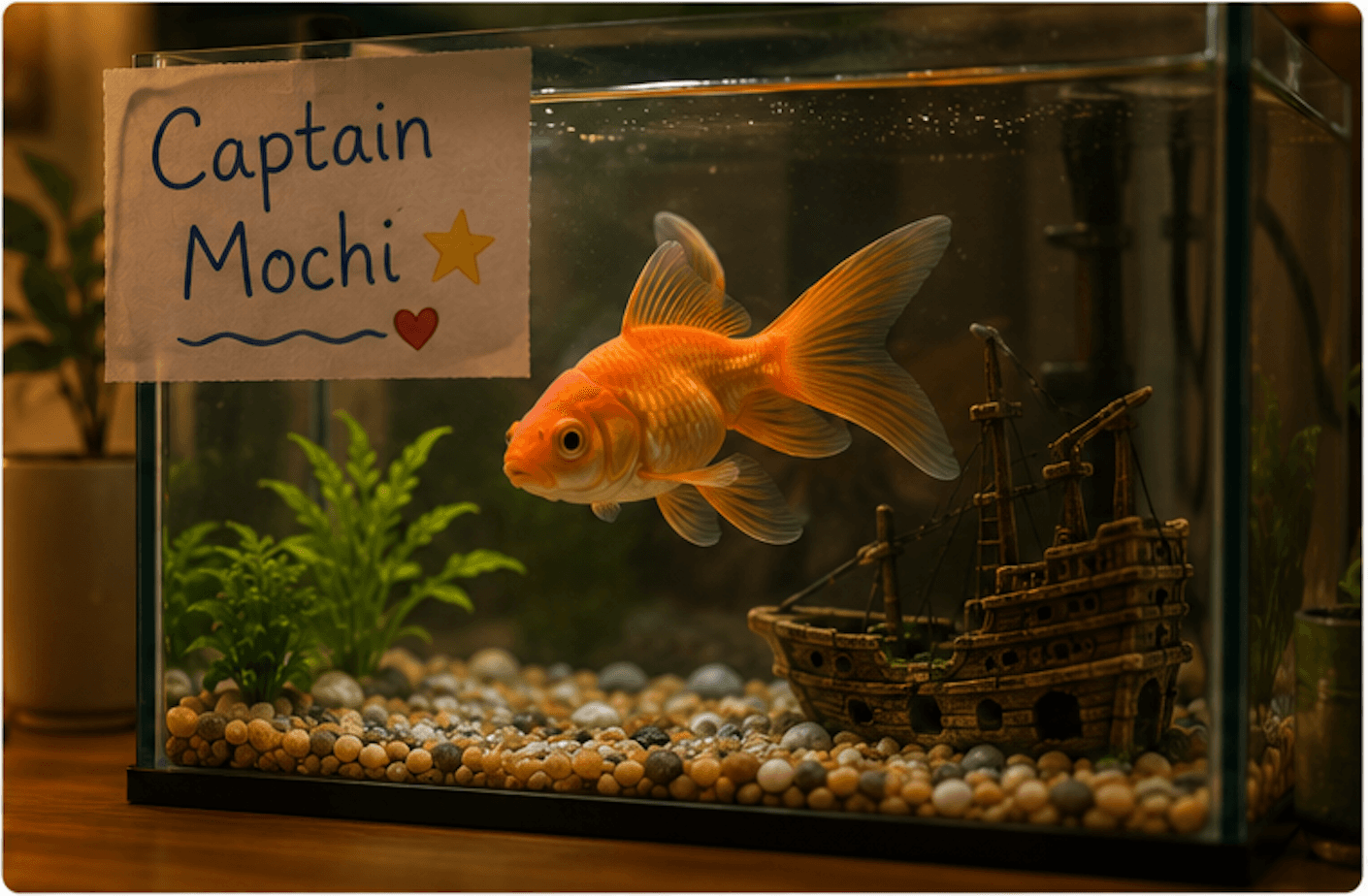
The Goldfish Who Wouldn’t Swim Straight: What Mochi Taught Us About Fish Care
Mochi the goldfish came home as a birthday surprise and soon began swimming sideways. His story is a funny, tender reminder that goldfish are not decor — they are living pets who need proper food, clean water and real care.
Open guide