The Goldfish Who Wouldn’t Swim Straight: What Mochi Taught Us About Fish Care
Mochi the goldfish came home as a birthday surprise and soon began swimming sideways. His story is a funny, tender reminder that goldfish are not decor — they are living pets who need proper food, clean water and real care.
Clear answers, fixed package context, and grooming advice that matches how pet parents actually search before booking.
The goldfish came home in a plastic bag on a Wednesday evening.
He was tiny, bright orange and round in the way only a goldfish can be. A little comet with fins. A birthday surprise for an eight-year-old who immediately named him Mochi because he looked like a dumpling.
For the first week, Mochi was everything a beginner fish parent hopes for.
He darted around his bowl. He followed the child’s finger on the glass. He created exactly the kind of manageable chaos a one-inch creature can create.
Then one morning, Mochi stopped swimming straight.
He tilted to the side. He sank suddenly. Then he shot upward as if startled by his own body.
The family panicked in the way first-time fish parents often do: frantic Googling, three different WhatsApp forwards, and one neighbour confidently suggesting that maybe someone had cast an evil eye on the fish.
Meanwhile, Mochi kept drifting sideways like a tiny confused submarine.
That was when the family realised something most people learn too late:
Goldfish may look simple, but goldfish care is not simple.
The goldfish came home in a plastic bag on a Wednesday evening.
He was tiny, bright orange and round in the way only a goldfish can be. A little comet with fins. A birthday surprise for an eight-year-old who immediately named him Mochi because he looked like a dumpling.
For the first week, Mochi was everything a beginner fish parent hopes for.
He darted around his bowl. He followed the child’s finger on the glass. He created exactly the kind of manageable chaos a one-inch creature can create.
Then one morning, Mochi stopped swimming straight.
He tilted to the side. He sank suddenly. Then he shot upward as if startled by his own body.
The family panicked in the way first-time fish parents often do: frantic Googling, three different WhatsApp forwards, and one neighbour confidently suggesting that maybe someone had cast an evil eye on the fish.
Meanwhile, Mochi kept drifting sideways like a tiny confused submarine.
That was when the family realised something most people learn too late:
Goldfish may look simple, but goldfish care is not simple.
Quick answer: Why is my goldfish swimming sideways?
A goldfish swimming sideways, floating upside down, sinking suddenly or struggling to stay balanced may have swim bladder dysfunction. Swim bladder issues can be linked to overfeeding, poor diet, constipation, poor water quality, sudden temperature changes or underlying illness.
If your goldfish is not swimming straight, do not rely only on home remedies or random online advice. Check water quality, stop overfeeding, and consult a fish veterinarian or aquatic pet specialist if possible.
| Possible sign | What it may indicate |
|---|---|
| Swimming sideways | Buoyancy or swim bladder issue |
| Floating upside down | Swim bladder dysfunction or digestive problem |
| Sinking suddenly | Buoyancy imbalance or weakness |
| Loss of appetite | Stress, poor water quality or illness |
| Lethargy | Water, diet or health concern |
| Gasping near surface | Low oxygen or poor water quality |
| Clamped fins | Stress or illness |
This article is based on one pet parent’s lived experience and is not a substitute for veterinary advice. If your fish is swimming abnormally, gasping, not eating, floating upside down, sinking, showing marks, or getting worse, consult a qualified aquatic veterinarian or experienced fish health professional.
Meet Mochi: The birthday goldfish
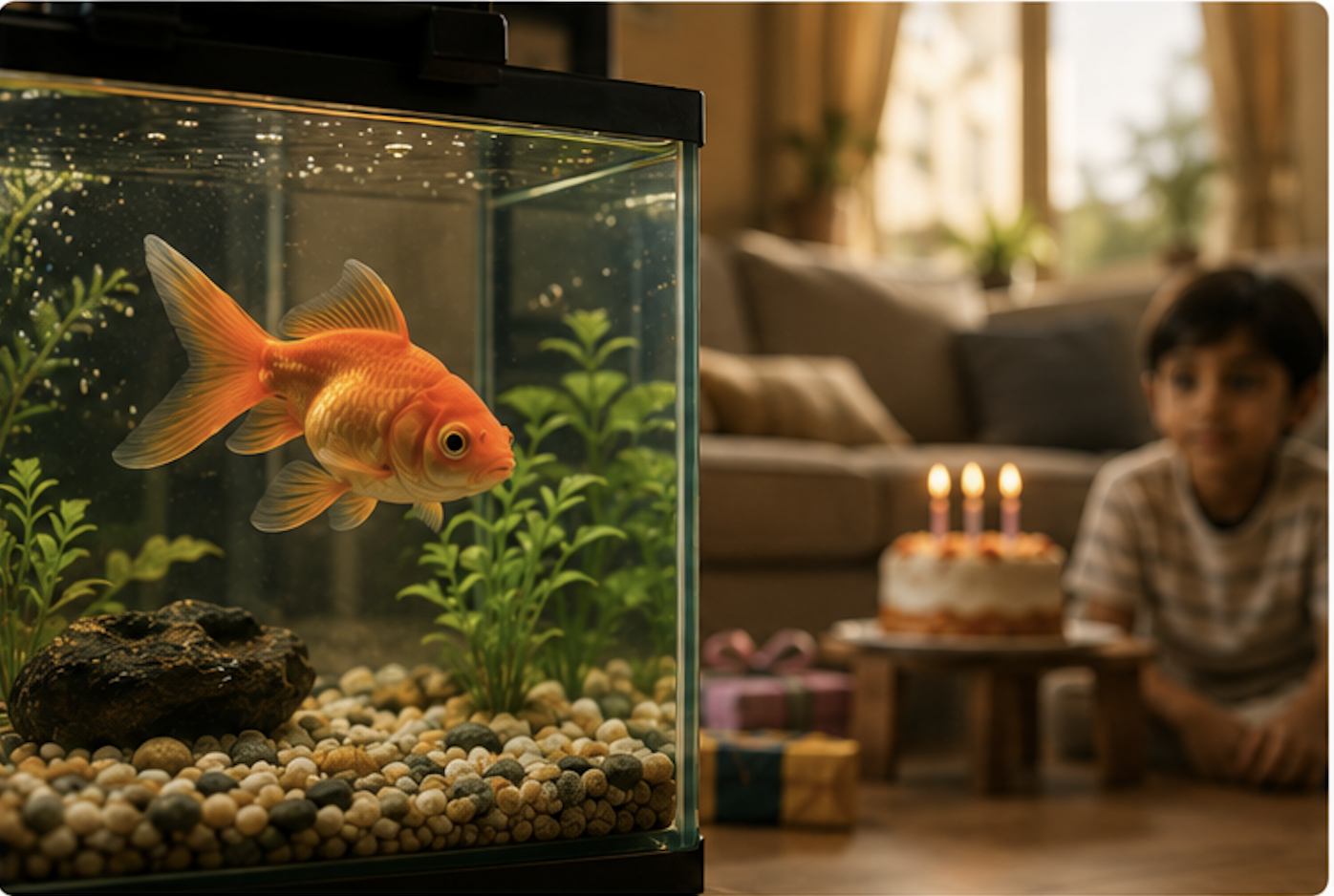
Mochi was meant to be a simple pet.
A small fish. A bright bowl. A child’s birthday surprise. Low maintenance, everyone assumed.
That is the first mistake many fish owners make.
Goldfish are often sold as beginner pets, but they are not decorations. They are living animals with specific needs: clean water, proper filtration, controlled feeding, good nutrition, stable temperature and enough space.
Mochi did not come with an instruction manual.
He came with hope, excitement and a family that loved him but did not yet know what he needed.
For a few days, love looked like enthusiasm.
Then love had to become learning.
The first warning sign: Mochi stopped swimming normally
When Mochi started tilting sideways, the family knew something was wrong.
He would list to one side, sink without control, then suddenly shoot upward. It looked strange, almost cartoonish, but it was not funny for long.
Fish cannot cry out like dogs or cats. They do not limp dramatically across a room or meow at your feet. Their warning signs are quieter.
A fish tells you something is wrong through movement, appetite, colour, breathing, posture and behaviour.
In Mochi’s case, the warning sign was movement.
He could no longer control his buoyancy properly.
What is swim bladder disease in goldfish?
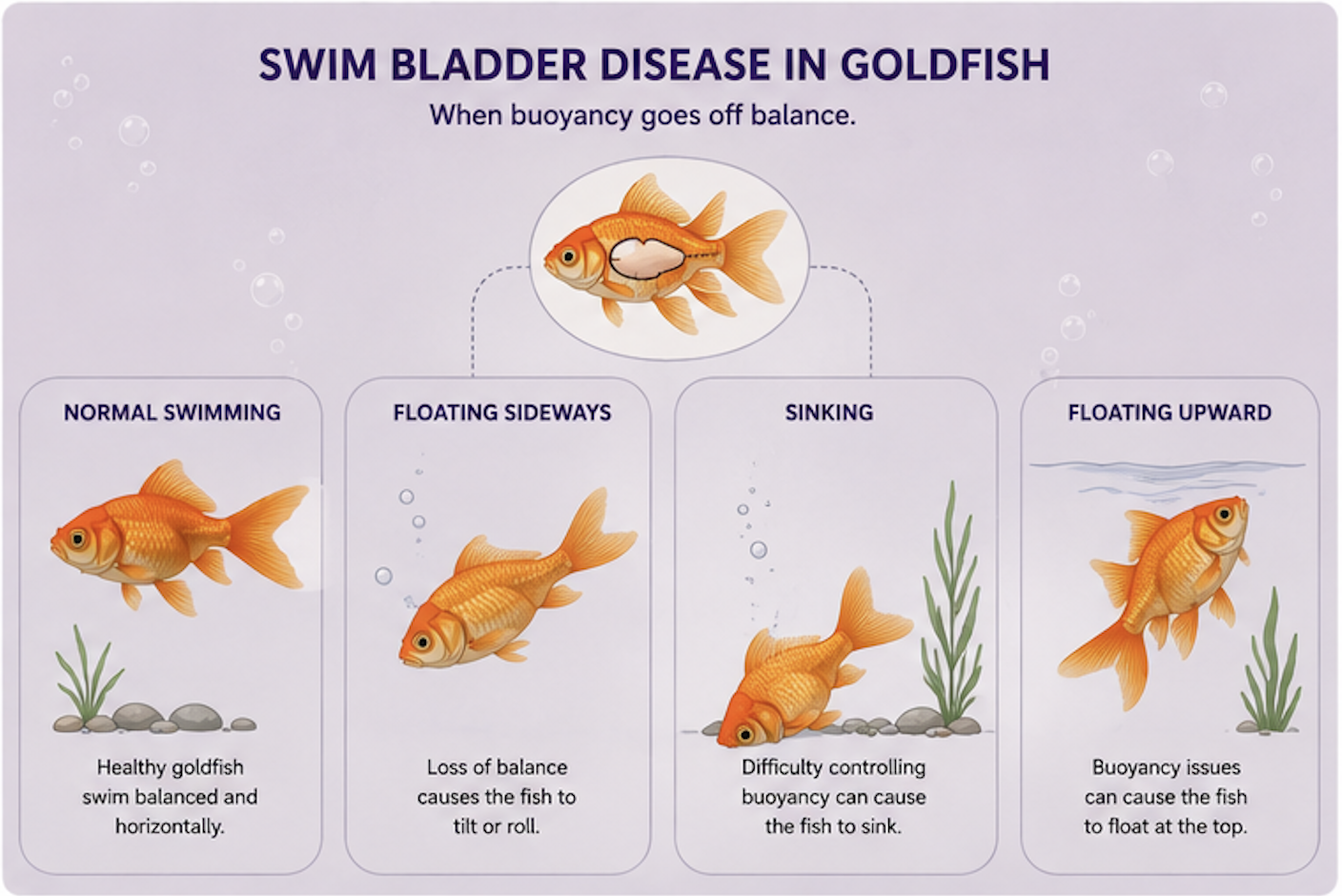
The swim bladder is an internal air-filled organ that helps many fish control buoyancy.
When it works properly, the fish can stay balanced in the water, rise, sink and swim normally.
When it is disrupted, the fish may struggle to stay upright or move normally.
Swim bladder dysfunction in goldfish can look like:
- Swimming sideways
- Floating upside down
- Sinking to the bottom
- Floating at the top
- Trouble diving
- Trouble staying upright
- Sudden upward or downward movement
- Reduced activity
- Difficulty feeding normally
Swim bladder problems are not always fatal, but they should be taken seriously.
The cause matters.
Sometimes the problem is linked to diet or overfeeding. Sometimes it may be linked to constipation, poor water quality, infection, injury, stress or tank conditions.
That is why diagnosis matters.
The beginner fish-care mistake: Overfeeding
Mochi’s family discovered that he was on what many first-time fish parents accidentally create: the great Indian beginner-fish diet.
Three random pinches of food whenever someone remembered.
Sometimes a little more because the child wanted to feed him.
Sometimes another pinch because he looked hungry.
Sometimes extra because fish food feels harmless.
But overfeeding is one of the most common mistakes in goldfish care.
Goldfish will often eat whenever food appears, but that does not mean they need more food. Uneaten food can also dirty the water, increasing waste and affecting tank quality.
Overfeeding can contribute to:
- Digestive problems
- Constipation
- Swim bladder issues
- Dirty water
- Ammonia buildup
- Poor oxygen balance
- Stress
- Cloudy tank water
- Long-term health problems
In small tanks or bowls, the problem can become worse quickly because water quality changes faster.
Why goldfish bowls can be a problem
Many families bring home goldfish in bowls because bowls look cute, affordable and easy to manage.
But goldfish usually need more space and better filtration than people realise.
A small bowl can create problems because:
- Waste builds up quickly
- Oxygen levels may drop
- Temperature changes faster
- Water quality becomes unstable
- There may be no proper filtration
- The fish has limited swimming space
- Uneaten food pollutes the water quickly
Goldfish produce a surprising amount of waste for their size. Clean water is not optional. It is the foundation of fish health.
Mochi’s story began in a small setup, like many goldfish stories do.
The lesson was clear: the smaller the setup, the less room there is for mistakes.
Getting professional help for a goldfish
The family tried to understand what was happening.
There was frantic searching. There were messages. There was advice from people who sounded confident but did not actually know fish medicine.
Finally, a friend suggested reaching out through All Tails to find professional help.
The family raised an enquiry and was connected with a nearby veterinarian willing to examine Mochi.
So they packed the bowl carefully in a shoebox, cushioned it with towels like a newborn, and rushed to the clinic.
The vet took one look and said what no first-time fish parent wants to hear:
Mochi had swim bladder dysfunction.
Not necessarily fatal.
But not something to fix by guessing, changing the water randomly or praying to the fish gods.
What the vet changed
The treatment was not dramatic, but it was precise.
Mochi was placed in a smaller quarantine setup. The water temperature was adjusted. Tank water was treated. Feeding was stopped temporarily. The family was told to fast him.
Fasting a fish sounded absurd at first.
The child looked offended.
The father felt judged.
But Mochi seemed almost relieved to stop floating sideways.
Over the next few days, the family made important changes:
- Overfeeding stopped completely
- Water quality was managed
- Temperature was adjusted carefully
- High-quality sinking pellets were introduced
- A short fasting period was followed under guidance
- Blanched green peas were introduced as advised
- Mochi was monitored closely
This was the family’s first lesson in fish medicine: sometimes the smallest pet needs the most precise care.
Why fasting may help some fish with swim bladder issues
In some cases, a short fasting period may help fish with digestive-related buoyancy issues.
If the swim bladder problem is linked to constipation or overfeeding, giving the digestive system a break may help.
But fasting should not be treated as a universal cure.
A fish swimming sideways could have different causes, including infection, injury, water quality problems or other illness. What helped Mochi may not be right for every fish.
If your fish is showing swim bladder symptoms, get expert advice before trying repeated treatments.
Why peas are often used for goldfish digestion
The vet introduced a classic fish-care trick: blanched green peas, skinned and mashed.
For some goldfish, peas may help digestion and buoyancy when constipation or diet imbalance is involved.
Mochi hated everything about the pea diet.
Until he did not.
By the fourth day, he was swimming in something that almost resembled a straight line. By the seventh day, he was back to doing figure-eights and demanding attention like a one-inch aquatic dictator.
The pea was not magic.
The real change was better care: better feeding, better water, better observation and professional guidance.
What goldfish should eat
Goldfish need a balanced diet, not random overfeeding.
A better feeding routine may include high-quality sinking pellets or species-appropriate food, controlled portions and occasional vet-approved additions depending on the fish’s needs.
Many fish owners use floating flakes because they are common, but some goldfish may gulp air at the surface while eating, which can worsen buoyancy issues in some cases. Sinking pellets may be recommended in certain situations.
General feeding principles include:
- Feed small portions
- Avoid random extra pinches
- Remove uneaten food
- Use quality fish food
- Avoid overfeeding
- Keep feeding times consistent
- Observe how the fish responds
- Ask a fish expert if symptoms appear
A fish that “looks hungry” is not always hungry.
Goldfish are excellent at convincing humans otherwise.
What good goldfish care actually means
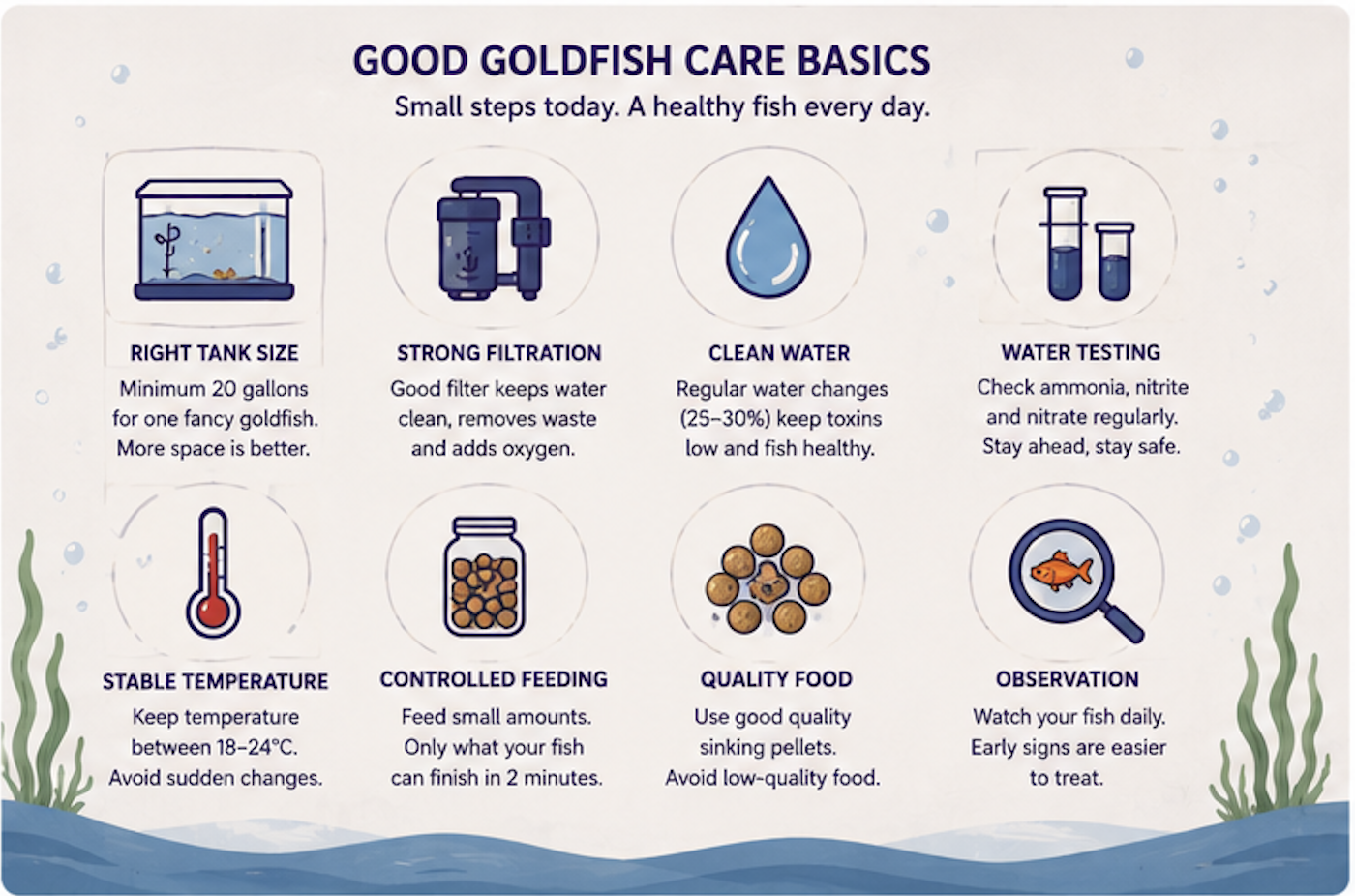
Good goldfish care is about consistency.
It includes:
- Proper tank size
- Good filtration
- Clean water
- Water testing
- Stable temperature
- Controlled feeding
- Quality food
- Observation
- Quarantine when needed
- Veterinary help for illness
Goldfish care is not difficult because goldfish are fragile in a dramatic way.
It is difficult because small mistakes build up quietly.
Too much food. Too little filtration. Dirty water. A bowl that is too small. No water testing. No expert help until symptoms are serious.
By the time a fish starts swimming abnormally, the problem may already have been developing for a while.
Goldfish are not beginner pets
This is the lesson Mochi’s family learned.
Goldfish are often given to children as easy pets, but they are not easy in the way people assume.
They are delicate, high-maintenance, expressive little creatures who need good water, good food and good care.
They may be small, but they are still patients when something goes wrong.
They may live in a tank, but they are still pets.
A goldfish is not a decoration for a table.
A goldfish is an animal whose entire world is the water you provide.
Signs your goldfish needs help
Pet parents should watch for early signs of fish health problems.
Your goldfish may need help if you notice:
- Swimming sideways
- Floating upside down
- Sinking repeatedly
- Gasping at the surface
- Not eating
- Lethargy
- Clamped fins
- Red streaks
- White spots
- Bloated belly
- Torn fins
- Strange spots or growths
- Rubbing against objects
- Cloudy eyes
- Sudden colour changes
Do not wait too long if symptoms persist or worsen.
Fish health can decline quickly, especially in poor water conditions.
What to do if your goldfish is swimming sideways
If your goldfish is swimming sideways, start with observation and water quality.
Helpful first steps include:
- Stop overfeeding
- Remove uneaten food
- Check water quality
- Check temperature
- Observe appetite
- Look for bloating or visible injury
- Avoid sudden major water changes without understanding the setup
- Avoid random medicines
- Contact a fish vet or aquatic expert
Do not add multiple treatments at once based on online advice. That can make things worse.
The safest approach is to identify the cause.
Why water quality matters so much
For fish, water is not just the background.
Water is their air, floor, food environment and living space.
Poor water quality can stress fish and contribute to illness.
Common water problems include:
- Ammonia buildup
- Nitrite issues
- Low oxygen
- Wrong temperature
- Sudden pH changes
- Dirty substrate
- Uneaten food decay
- Overcrowding
- Lack of filtration
A tank may look clean but still have unsafe water chemistry.
This is why water testing matters.
Clear water does not always mean healthy water.
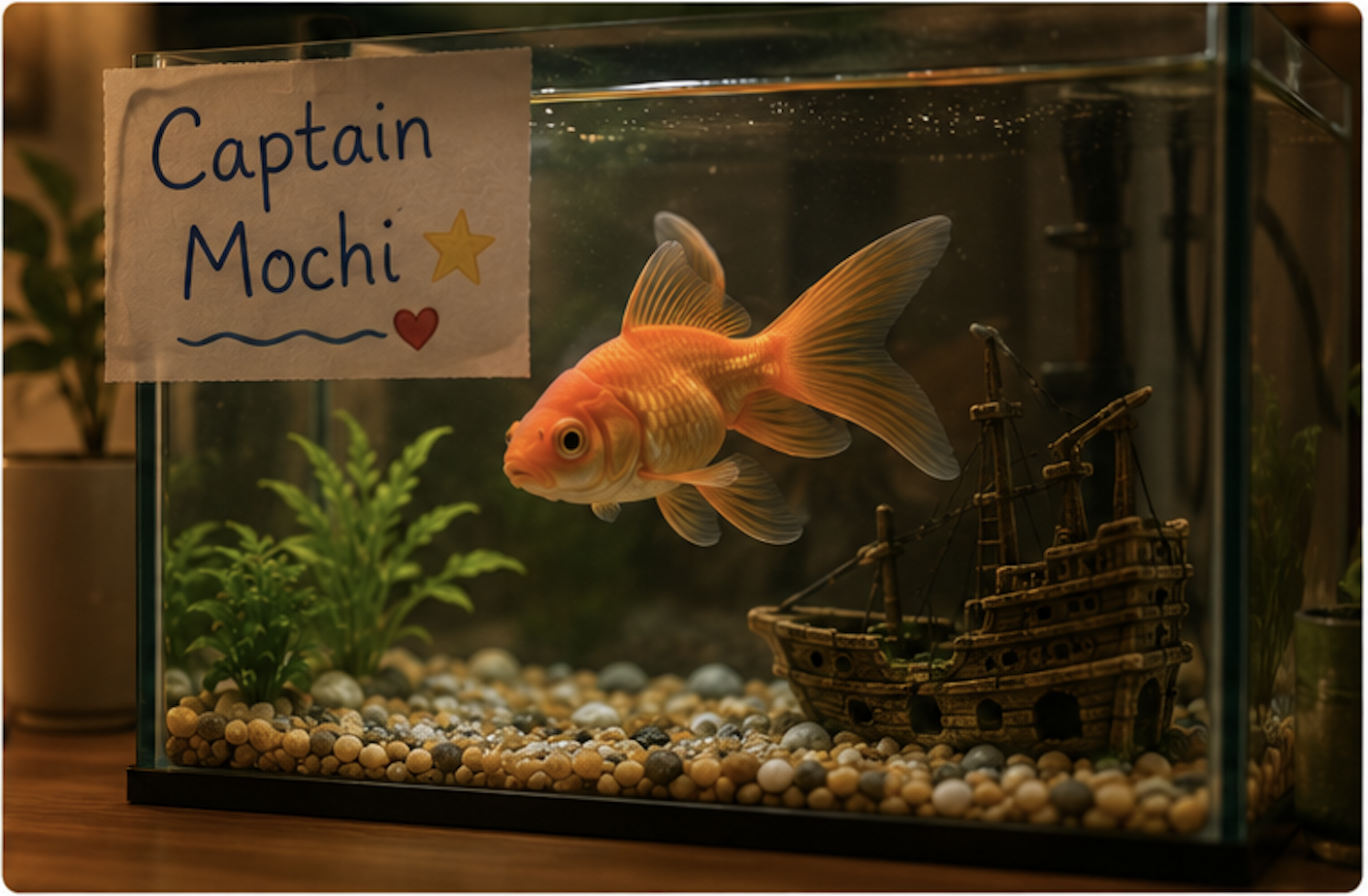
The child’s label: Captain Mochi
By the seventh day, Mochi was back.
He was swimming properly again, doing figure-eights and acting like he owned the tank.
The child made a label and stuck it proudly on his tank:
Captain Mochi: Survived Swim Bladder 2025.
It was funny.
It was also a tiny celebration of something bigger.
The family had stopped treating Mochi like an accessory and started treating him like a living pet with real needs.
That changed everything.
What Mochi teaches first-time fish parents
Mochi’s story is funny because it is familiar.
Many families bring home fish with love but not enough information. They assume fish are easy because fish are quiet. They assume a bowl is enough because bowls are sold everywhere. They assume more food is kindness because feeding feels like bonding.
Mochi teaches something different.
He teaches that care is not measured by how often you feed a pet. It is measured by whether you understand what the pet actually needs.
For fish, love looks like clean water.
Love looks like not overfeeding.
Love looks like proper tank setup.
Love looks like asking for help before it is too late.
What this story means to All Tails
At All Tails, we believe every pet problem deserves to be taken seriously.
Not only dog grooming problems.
Not only cat anxiety.
Not only big emergencies.
Even a small goldfish swimming sideways matters.
Mochi’s story reminds us that pet care is not about the size of the animal. It is about the responsibility we accept when we bring any living creature home.
A dog needs grooming and safety.
A cat needs routine and comfort.
A parrot needs diet, enrichment and avian care.
A goldfish needs water, nutrition and attention.
Different pets. Same truth.
They are not decor.
They are lives.
Final thought: Treat fish like real pets
The vet said it best:
If you want your fish to live years, not weeks, treat them like real patients, not decor.
Mochi came home as a birthday surprise.
He became a lesson in attention.
A tiny orange reminder that small pets do not need small care.
Sometimes love is not another pinch of food.
Sometimes love is clean water, patience, restraint and the humility to learn that even a one-inch aquatic dictator deserves proper care.
Quick answers before you book
Why is my goldfish swimming sideways?
A goldfish swimming sideways may have swim bladder dysfunction or another health issue affecting buoyancy. Causes can include overfeeding, constipation, poor diet, poor water quality, temperature changes, infection or injury. Consult a fish vet or aquatic expert if symptoms persist.
What is swim bladder disease in goldfish?
Swim bladder disease or swim bladder dysfunction affects a fish’s ability to control buoyancy. Affected fish may swim sideways, float upside down, sink, float at the surface or struggle to stay balanced.
Can overfeeding cause swim bladder problems in goldfish?
Overfeeding can contribute to digestive issues, constipation, poor water quality and buoyancy problems in some goldfish. Feeding controlled portions and removing uneaten food is important.
Should I fast my goldfish if it has swim bladder symptoms?
A short fasting period may help in some digestive-related swim bladder cases, but it is not a universal cure. Speak to a fish vet or aquatic expert before relying on fasting as treatment.
Do peas help goldfish with swim bladder disease?
Blanched, skinned and mashed peas are sometimes used to support digestion in goldfish when constipation is suspected. However, peas are not a guaranteed cure and should be used with proper guidance.
What should goldfish eat?
Goldfish should eat controlled portions of quality fish food, often including species-appropriate pellets. Some fish may benefit from sinking pellets. Avoid random overfeeding and ask an expert if your fish has recurring buoyancy issues.
Are goldfish beginner pets?
Goldfish are often treated as beginner pets, but they need proper tank space, filtration, clean water, stable conditions and controlled feeding. They are not low-care decor.
Is a bowl enough for a goldfish?
A small bowl is usually not ideal for goldfish because waste builds up quickly, oxygen may be limited, and water quality can become unstable. Goldfish usually need a proper tank with filtration.
What are signs my goldfish is sick?
Signs may include swimming sideways, floating upside down, sinking, gasping at the surface, not eating, lethargy, clamped fins, bloating, white spots, red streaks, torn fins or sudden colour changes.
What should I do first if my fish is not swimming straight?
Stop overfeeding, remove uneaten food, check water quality and temperature, observe other symptoms, and consult a fish vet or aquatic expert. Avoid using multiple random treatments at once.
Can All Tails help with small pet care concerns?
All Tails takes pet care concerns seriously and helps pet parents think responsibly about their animals, whether dogs, cats, birds or small pets. For medical concerns, always consult a qualified veterinarian or specialist.
What does Mochi’s story teach fish owners?
Mochi’s story teaches that goldfish are not decor. They need clean water, proper food, controlled feeding, observation and professional help when something goes wrong.
Our editorial team consists of professional pet groomers and pet-care researchers who write clear, practical guides based on real grooming sessions across Delhi NCR, Chandigarh Tricity, and Dehradun.
Leave the grooming to us.
Trained groomers at your home — packages from ₹999. Pay online or after the session.
More guides in the same flow
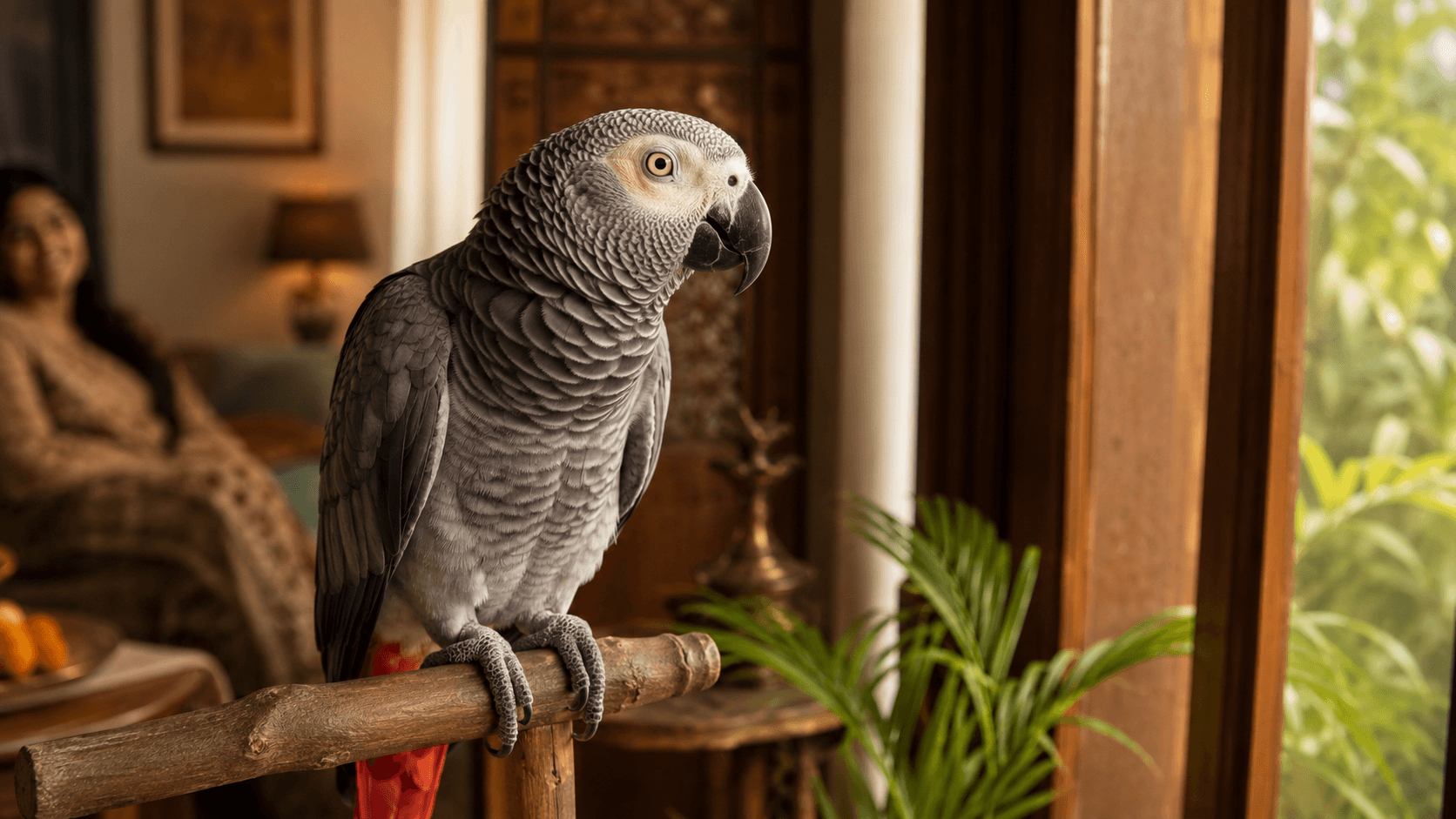
What an African Grey Parrot Taught Us About Exotic Pet Care in India
Michelle the African Grey parrot was never just a pet. Her story is a moving reminder that exotic pet care in India requires patience, better diet, avian vet care, social learning and the humility to keep learning from the animals we love.
Open guide
The Suitcase Cat: Understanding Cat Anxiety and Travel Stress
Luna the cat used to hide inside suitcases before every family trip. Her story is a gentle reminder that cat anxiety is not stubbornness — it is often a request for safety, routine and reassurance.
Open guide
Rover’s Secret Children: Why Neutering Matters
Rover was a loved Labrador who always came home after his evening adventures. But somewhere in the city, his puppies were born into cardboard boxes and uncertain futures. This story asks pet parents to rethink freedom, masculinity and the responsibility of neutering.
Open guide