What an African Grey Parrot Taught Us About Exotic Pet Care in India
Michelle the African Grey parrot was never just a pet. Her story is a moving reminder that exotic pet care in India requires patience, better diet, avian vet care, social learning and the humility to keep learning from the animals we love.
Clear answers, fixed package context, and grooming advice that matches how pet parents actually search before booking.
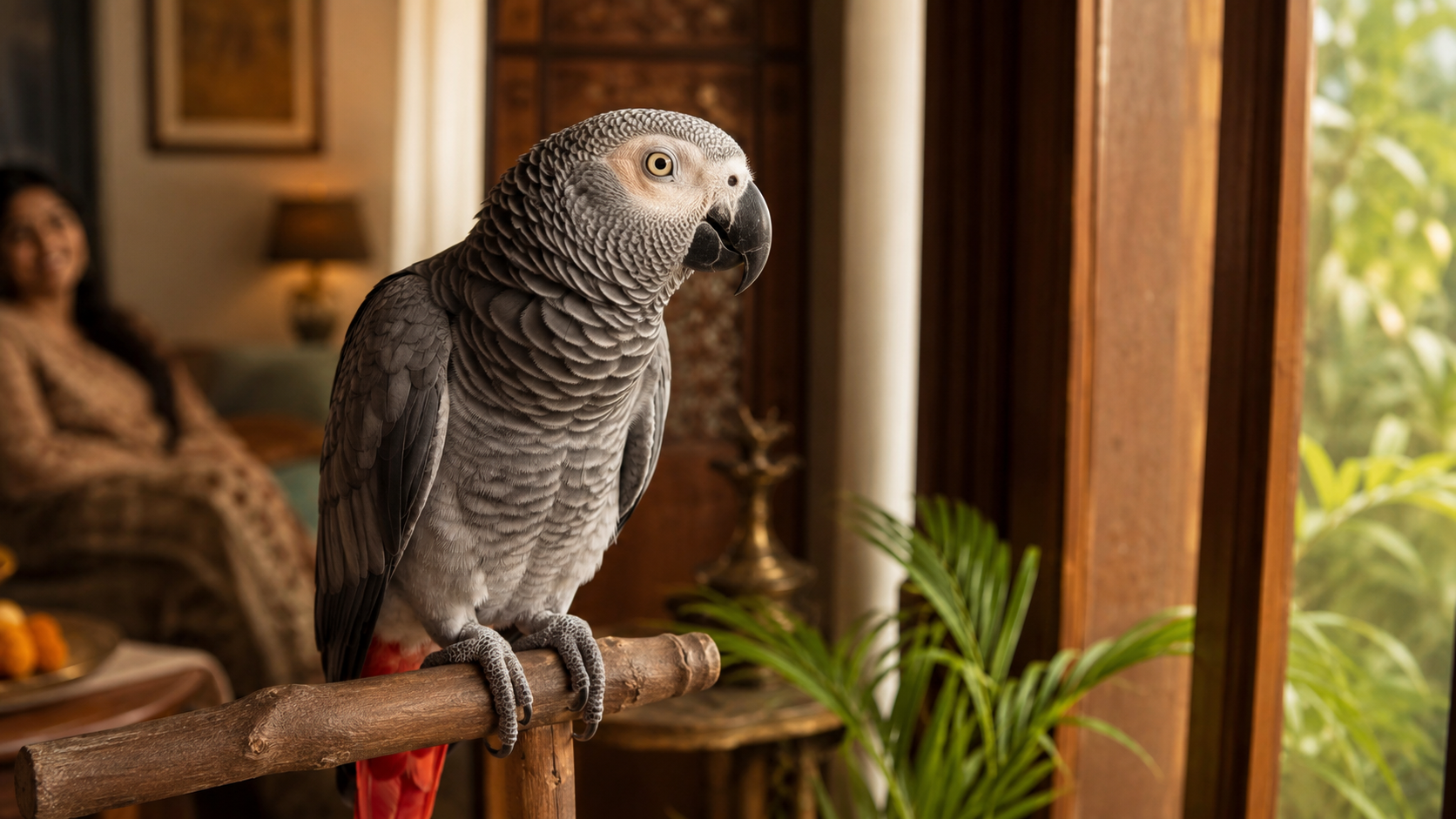
Some pets enter a home quietly. Others arrive like a personality, a teacher and a tiny storm with feathers.
Michelle was the second kind.
She was an African Grey parrot, captive bred, only a year and a half old when she came into the family as a birthday gift from a dear uncle in Dehradun. At the time, my father was serving as the Equitation Officer at IMA, and Michelle quickly became much more than a bird in a cage.
She was sharp-eyed, dramatic, clever, stubborn and deeply entertaining. She picked at sunflower seeds all day, refused guavas and chillies, and watched the world with the confidence of someone who knew she was smarter than everyone else in the room.
In the pre-Google era, caring for exotic birds in India was not easy. Reliable information was scarce. Avian specialists were hard to find. Families often depended on what breeders, relatives or shopkeepers told them.
We were told sunflower seeds were enough.
They were not.
Michelle’s story is not only about an African Grey parrot who danced to The Beatles and copied human voices with alarming accuracy. It is also a story about diet, warning signs, exotic pet healthcare in India, social learning, behaviour, humility and the truth that many pet parents learn the hard way:
You do not really train a parrot like you train a dog.
Often, the parrot trains you.
Some pets enter a home quietly. Others arrive like a personality, a teacher and a tiny storm with feathers.
Michelle was the second kind.
She was an African Grey parrot, captive bred, only a year and a half old when she came into the family as a birthday gift from a dear uncle in Dehradun. At the time, my father was serving as the Equitation Officer at IMA, and Michelle quickly became much more than a bird in a cage.
She was sharp-eyed, dramatic, clever, stubborn and deeply entertaining. She picked at sunflower seeds all day, refused guavas and chillies, and watched the world with the confidence of someone who knew she was smarter than everyone else in the room.
In the pre-Google era, caring for exotic birds in India was not easy. Reliable information was scarce. Avian specialists were hard to find. Families often depended on what breeders, relatives or shopkeepers told them.
We were told sunflower seeds were enough.
They were not.
Michelle’s story is not only about an African Grey parrot who danced to The Beatles and copied human voices with alarming accuracy. It is also a story about diet, warning signs, exotic pet healthcare in India, social learning, behaviour, humility and the truth that many pet parents learn the hard way:
You do not really train a parrot like you train a dog.
Often, the parrot trains you.
Quick answer: What does caring for an African Grey parrot really involve?
Caring for an African Grey parrot is not just about feeding seeds and teaching words.
African Greys need a balanced diet, social interaction, mental stimulation, regular health checks, safe handling, a consistent routine and access to an avian or exotic pet veterinarian.
They are intelligent, emotional and highly social birds. They can learn words, mimic voices, observe routines, express preferences and communicate discomfort through behaviour.
| Basic care area | Why it matters |
|---|---|
| Balanced diet | Seed-only diets can lead to nutritional problems |
| Social interaction | Parrots learn by watching and can suffer when isolated |
| Health monitoring | Breathing changes, appetite loss and dull feathers can be warning signs |
| Safe handling | Parrots can bite hard when scared or stressed |
| Veterinary care | Exotic birds often need specialised avian care |
| Routine | Light, sleep and feeding routines affect health and behaviour |
| Enrichment | Intelligent birds need stimulation, not just a cage |
This article is based on one pet parent’s lived experience and is not a substitute for veterinary advice. If your bird shows breathing difficulty, appetite loss, blocked nostrils, lethargy, feather changes or unusual behaviour, consult an avian or exotic pet veterinarian immediately.
Meet Michelle: The African Grey with attitude
Michelle was never a background pet.
She had presence.
She greeted people on her own terms. She observed before responding. She picked favourites. She performed when she felt like it and ignored people when she did not.
Her favourite song was Michelle by The Beatles, naturally. Every time it played, she would sing along as if the song had been written for her personally.
She did not just repeat words. She used timing.
She could imitate different family members so well that she caused chaos across the house, calling one person in another person’s voice. She knew when someone was entering a room. She knew which sounds got a reaction. She understood rhythm, attention and mischief.
That is the magic of African Grey parrots.
They are not decorative birds. They are thinking, learning, social beings with memory, preference and personality.
The first mistake: Thinking sunflower seeds were enough
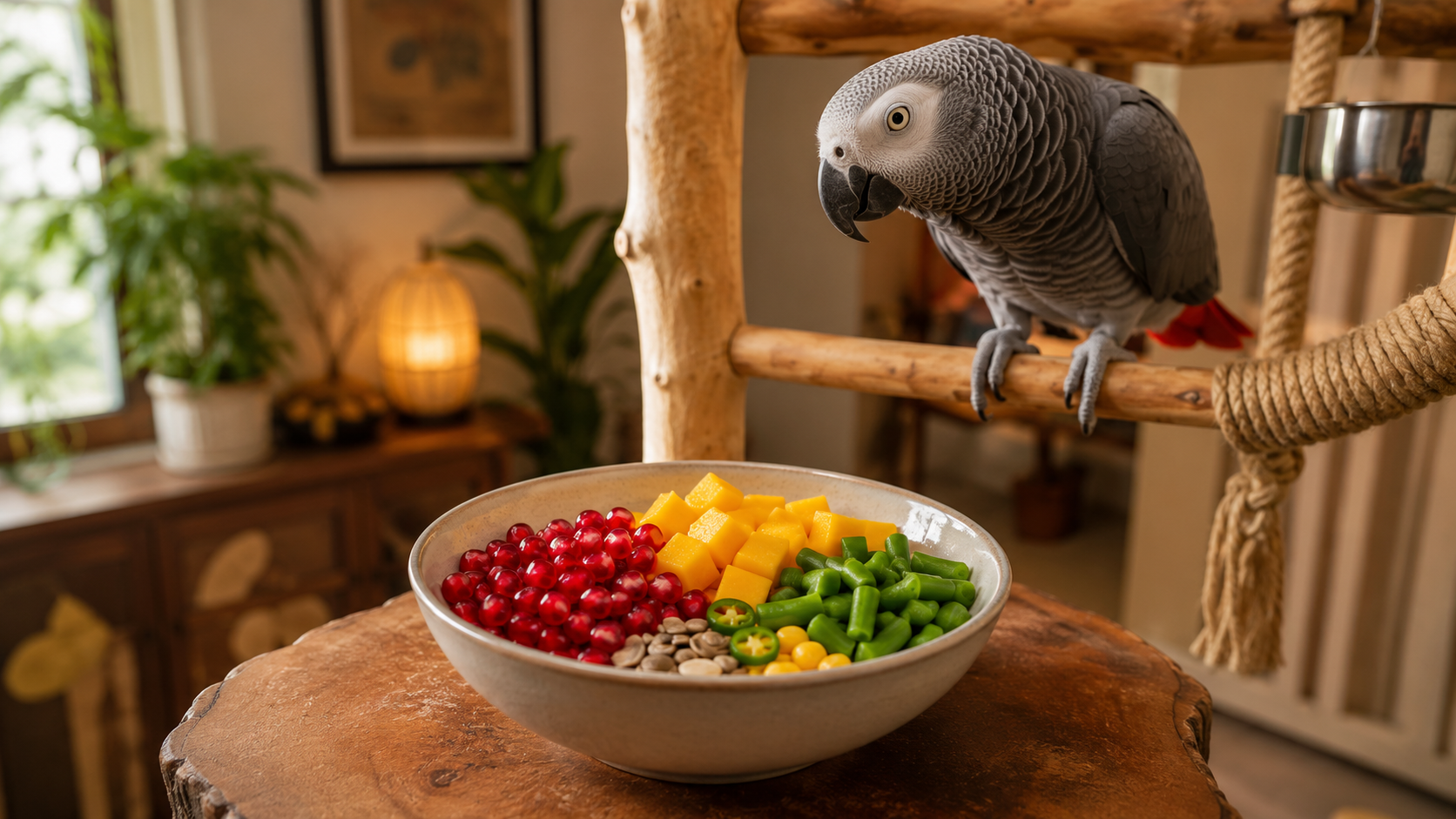
Michelle loved sunflower seeds.
Like many parrots, she picked her favourite food and rejected the healthier options. Guavas were ignored. Chillies were dismissed. Fresh vegetables were treated with suspicion.
At the time, we believed what we had been told: sunflower seeds were enough, although fresh vegetables would be good if she ate them.
This is a common mistake in parrot care.
Seed-heavy diets can be too limited for parrots. Sunflower seeds may be loved by birds, but love does not mean nutritional balance. A parrot who eats mostly seeds may miss out on vitamins, minerals and nutrients that support overall health, feathers, immunity and long-term wellbeing.
Michelle would eventually teach us this lesson the hard way.
The warning signs we almost missed
At first, the signs were subtle.
Michelle’s breathing became heavier. There was a faint whistle when she called out. She was still herself, but something had changed.
Then came a move from Dehradun to Jaipur.
The dust in Jaipur made things worse. Soon, both her nostrils were blocked. She had to breathe through her mouth. Her appetite dropped. Her feathers lost their shine. Her chatter reduced.
For a bird like Michelle, silence was alarming.
Parrots often hide illness until symptoms become serious. In the wild, appearing weak can make them vulnerable. At home, this means pet parents need to notice small changes early.
Warning signs in parrots can include:
- Noisy or heavy breathing
- Open-mouth breathing
- Blocked nostrils
- Reduced appetite
- Dull feathers
- Reduced vocalisation
- Low energy
- Changes in droppings
- Sleeping more than usual
- Sitting fluffed up for long periods
- Sudden behaviour changes
If your bird shows breathing difficulty, do not wait. Speak to an avian or exotic pet veterinarian as soon as possible.
What are rhinoliths in parrots?
Michelle was diagnosed with rhinoliths.
Rhinoliths are hard, stone-like masses that can form inside the nasal cavity. In birds, they can block the nostrils and make breathing difficult.
In Michelle’s case, the blockage became severe. Both nostrils were affected, and she was forced to breathe through her mouth.
This was not something that could be fixed with guesswork or home remedies.
It needed specialised veterinary care.
For exotic pets, especially birds, small symptoms can become serious quickly. A blocked nostril, breathing sound or appetite change should never be ignored.
Finding an exotic pet vet in India
At the time, Jaipur did not have an avian specialist we could easily access.
We searched desperately for help. Eventually, through an online forum, we found an exotic pet vet in Mumbai: Dr Shiwani Tandel.
By then, Michelle’s rhinoliths were advanced. The vet warned us that without intervention, the risk was serious.
So Michelle was booked on the first flight.
The surgery took only about 20 minutes, but it changed her life.
It also changed how we understood pet care.
The most important lesson was not just that Michelle needed surgery. It was that exotic pet ownership requires preparation, specialised knowledge and the humility to admit when you do not know enough.
What Michelle’s treatment taught us
After the procedure, the vet taught us how to care for Michelle properly.
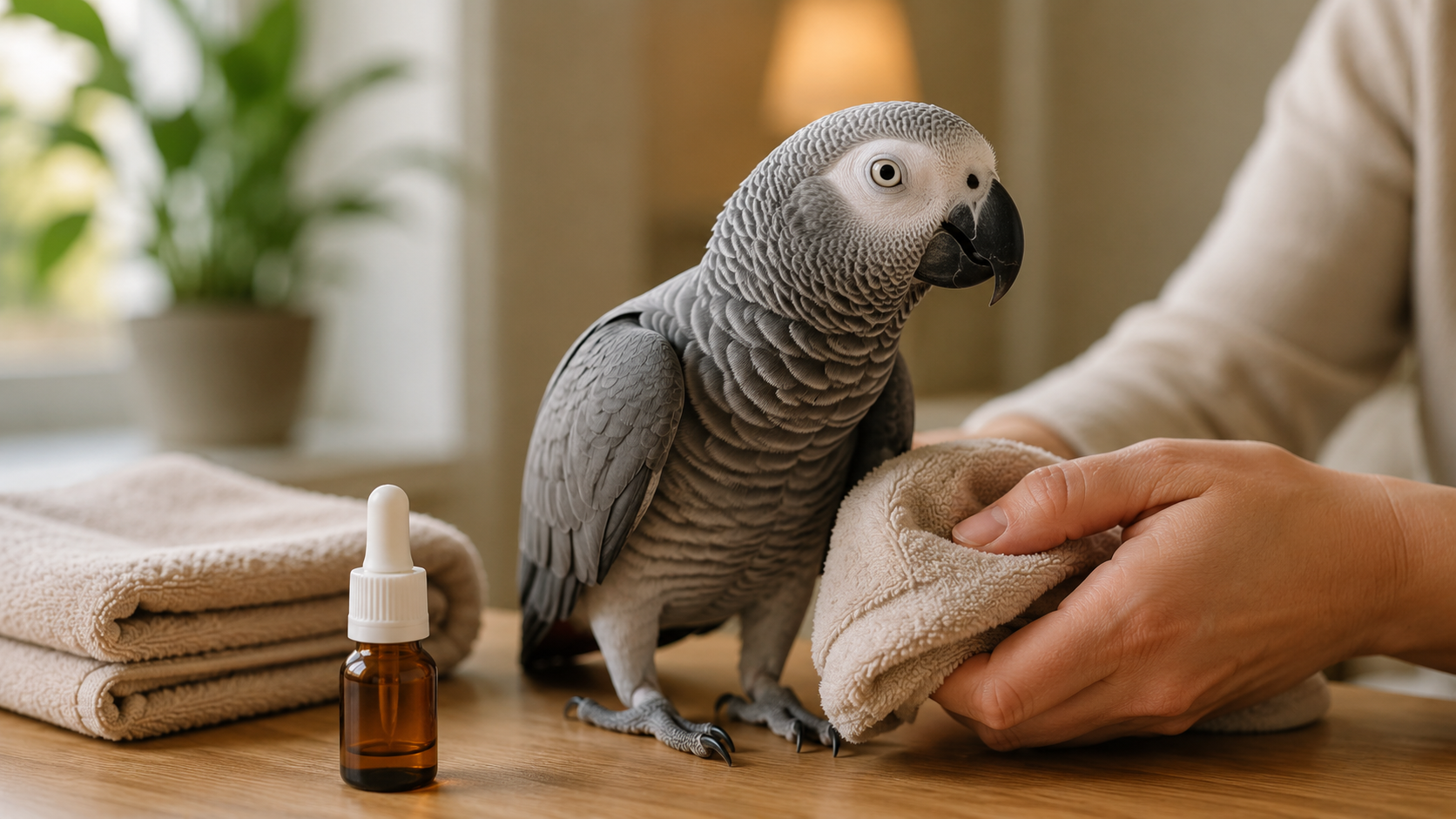
We learned how to cover her gently with a hand towel to reduce stress. We learned how to give medicines without frightening her or ruffling her feathers. We learned how to practise a safe beak hold because parrots can bite hard when scared, uncomfortable or defensive.
We also learned that this was not a one-time problem.
Michelle would likely need surgery every two to three years.
That meant long-term responsibility.
This is one of the biggest realities of exotic pet care: care does not end when the pet comes home. It continues through diet, routines, vet visits, environmental changes, behaviour management and emergency planning.
Before bringing home any exotic pet, pet parents should ask:
- Is there an exotic or avian vet nearby?
- Can I afford specialised care if needed?
- Do I understand the species’ diet?
- Do I understand its social needs?
- Do I know how to handle emergencies?
- Is my home environment suitable?
- Am I prepared for long-term care?
Exotic pets can be wonderful companions, but they are not low-effort pets.
The diet change that transformed her health
The biggest change after Michelle’s treatment was her diet.
We learned that sunflower seeds could not be her main food.
Slowly, we introduced new foods:
- Pomegranate
- French beans
- Mango
- Chillies
- Other fruits and vegetables
- Controlled portions of favourites like corn
Michelle resisted at first. She had opinions, and she was not shy about expressing them.
Then something interesting happened.
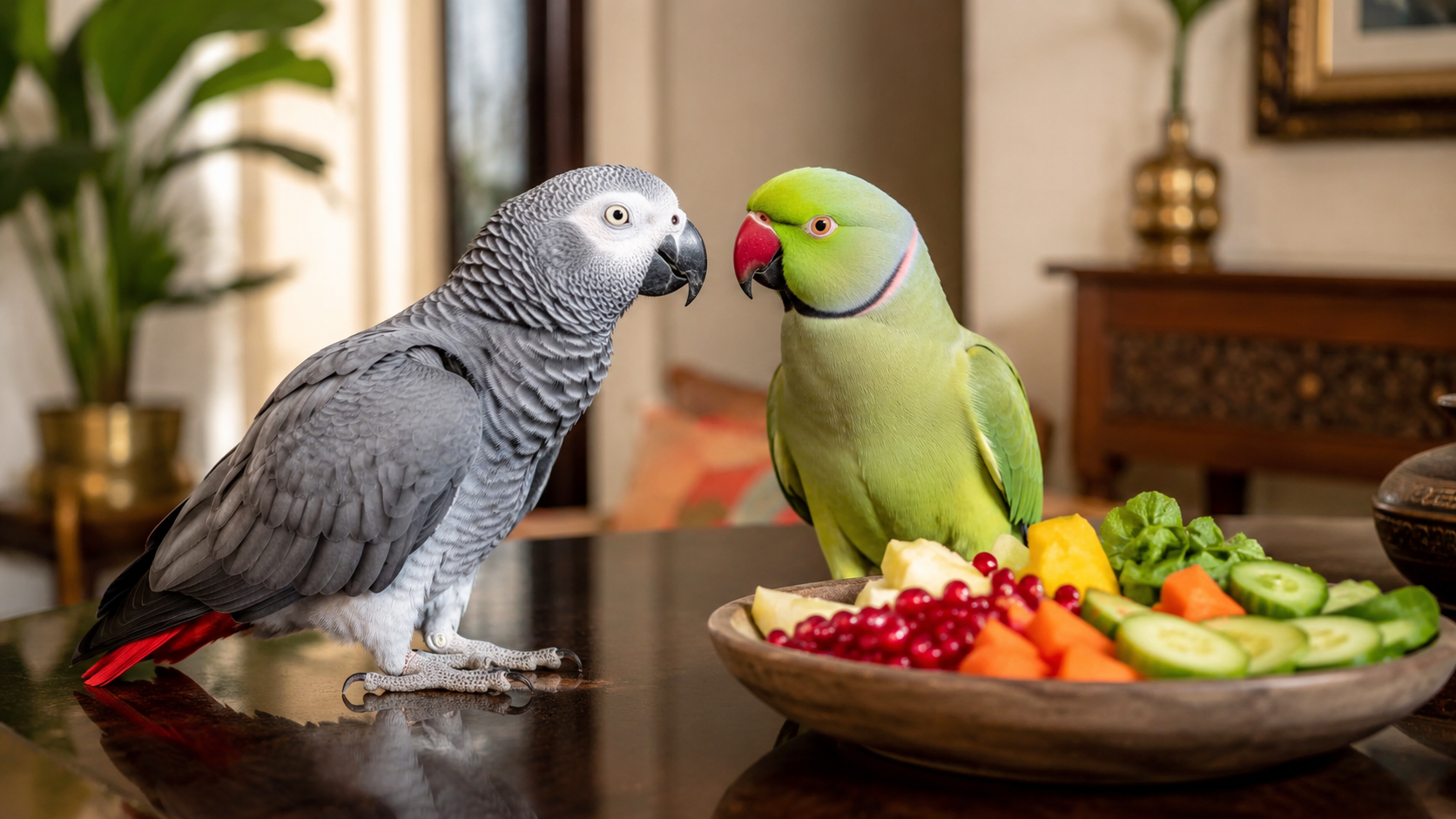
We rescued a green Indian parrot and placed them together. Watching the other parrot eat fruits and vegetables changed Michelle’s behaviour. She began to imitate.
This is one of the most beautiful things about parrots.
They learn by watching.
They observe. They copy. They respond socially.
The diet change did not happen because we forced it. It happened because Michelle saw another bird eating differently and decided to try.
Why parrots need social learning and companionship
Parrots are deeply social birds.
They are not meant to be ignored in a cage all day. They need interaction, observation, sound, movement and stimulation.
Michelle’s progress improved when she had another bird to observe. This does not mean every parrot must simply be placed with another bird without thought. Introductions should be safe, careful and species-appropriate.
But the larger lesson remains important:
Parrots learn socially.
They can suffer when isolated, especially intelligent and rare species.
A parrot’s wellbeing is not only about food and medicine. It is also about attention, enrichment and emotional life.
Healthy parrot enrichment can include:
- Safe toys
- Foraging activities
- Supervised time outside the cage
- Human interaction
- Bird-safe routines
- Exposure to natural light cycles
- Social observation
- Mental stimulation
- Consistent sleep schedule
A bored parrot is not just bored. A bored parrot can become stressed, loud, destructive, withdrawn or unhealthy.
Creating a better daily routine
The vet also advised changes in Michelle’s daily routine.
Food and water were removed at night. Her cage was covered. A darker environment was created to mimic natural rhythms and support rest.
Over time, Michelle’s health improved.
Her feathers grew back. Her energy returned. Her voice came back. Her personality expanded again.
The silence that had scared us was replaced by chatter, performance and mischief.
Her improvement reminded us that pet care is rarely one big decision. It is usually many small corrections made consistently.
Diet. Sleep. Vet care. Handling. Social interaction. Environment.
Together, these changed Michelle’s life.
Training a parrot starts with listening
People often ask how to train a parrot.
Michelle taught us that training does not begin with commands. It begins with listening.
Parrots communicate constantly.
A bite may mean fear, discomfort, overstimulation or protest. A scream may mean boredom, excitement, frustration or a demand for attention. Refusing food may be stubbornness, but it may also be illness, stress or dislike of change.
Training a parrot requires patience because parrots are not machines that repeat tricks on demand.
They are intelligent animals with preferences.
With parrots, training should be based on:
- Trust
- Routine
- Observation
- Positive reinforcement
- Respect for body language
- Slow introductions
- Gentle handling
- Patience
- Consistency
Michelle did not perform because she was forced to. She performed because she wanted to engage.
That difference matters.
Wing clipping, safety and indoor life
Wing clipping can be controversial, and every bird parent should discuss it with a qualified avian vet.
In Michelle’s case, wing clipping was advised for indoor safety.
For a bird living indoors, uncontrolled flight can create risks: ceiling fans, windows, kitchens, mirrors, doors, balconies and sudden escapes.
The lesson is not that every bird should be clipped.
The lesson is that safety decisions must be made thoughtfully, with the bird’s environment and wellbeing in mind.
Responsible bird care is not about following one rule blindly. It is about understanding the individual animal, the home, the risks and the advice of a qualified vet.
Exotic pets are not ornaments
Michelle taught us that an exotic pet is not an ornament.
A parrot is not a decoration for a living room. Not a conversation piece. Not a status symbol. Not a talking toy.
A parrot is a living, learning being.
Exotic pets require more than admiration. They require research, routine, money, attention, medical access and emotional patience.
They may bite. They may scream. They may reject food. They may need specialist care. They may require changes in your home and habits.
And if you are willing to learn, they may also become one of the most unforgettable companions of your life.
What pet parents in India should learn from Michelle
Michelle’s story carries lessons for anyone caring for an exotic pet in India.
The first lesson is that information matters.
The second is that diet matters.
The third is that access to the right vet can change everything.
The fourth is that behaviour is communication.
The fifth is that pets are not meant to fit into our lives silently. We must adapt too.
For exotic pet parents in India, here are the biggest takeaways:
- Do not rely only on seed-heavy diets
- Look for an avian or exotic pet vet before an emergency happens
- Notice breathing changes early
- Do not ignore appetite or feather changes
- Learn safe handling from a professional
- Respect your bird’s stress signals
- Provide social interaction and enrichment
- Understand that exotic pet care can be expensive
- Build routines that support health
- Never treat an exotic pet as decoration
Responsible pet ownership begins when we stop assuming and start learning.
How Michelle changed care for other birds too
Over time, Michelle’s care became easier because local vets became better trained. Dr Shiwani Tandel later helped train local Ooty vets in rhinolith surgery, which meant Michelle no longer needed to travel across states for care.
That may have helped other birds too.
This is one of the quiet gifts of responsible pet care. When one family searches, learns and asks better questions, the benefit can extend beyond one animal.
Lessons in pet care become lessons in empathy.
What this story means to All Tails
At All Tails, we believe better pet care begins with listening closely to animals.
That may mean noticing when a dog is anxious before grooming. It may mean understanding why a cat is stressed by travel. It may mean recognising that a bird’s silence, breathing change or food refusal can be a serious signal.
Michelle’s story reminds us that pets communicate long before humans understand them.
The responsibility is ours to pay attention.
Final thought: Maybe parrots train us more than we train them
Michelle came into the family as a pet.
She became a companion.
Then she became a teacher.
She taught us that sunflower seeds are not enough. That silence can be a warning. That exotic pet care requires humility. That parrots learn by watching. That behaviour is communication. That love is not just affection, but adaptation.
And perhaps most importantly, she taught us this:
You do not really train a parrot like you would train a dragon.
They train you.
To listen. To adapt. To be patient. To love them as they are.
Quick answers before you book
Can African Grey parrots live on sunflower seeds only?
No, African Grey parrots should not live on sunflower seeds only. A seed-heavy diet can be nutritionally inadequate. Parrots usually need a more balanced diet that may include suitable fruits, vegetables and veterinarian-recommended nutrition.
What are rhinoliths in parrots?
Rhinoliths are hard, stone-like masses that can form inside a bird’s nasal cavity. They may block the nostrils and cause breathing difficulty. A bird with breathing issues should be seen by an avian or exotic pet veterinarian.
What are warning signs of illness in parrots?
Warning signs can include heavy breathing, open-mouth breathing, blocked nostrils, reduced appetite, dull feathers, reduced vocalisation, low energy, sitting fluffed up for long periods and sudden behaviour changes.
Do African Grey parrots need social interaction?
Yes, African Grey parrots are intelligent and social birds. They need interaction, enrichment, observation and mental stimulation. They can learn by watching humans and other birds.
Is it difficult to care for an exotic pet in India?
Exotic pet care in India can be challenging because specialised vets, accurate information and species-specific care may not always be easily available. Pet parents should research diet, behaviour, medical needs and nearby avian or exotic vets before bringing home an exotic pet.
How do you train a parrot?
Training a parrot begins with trust, patience and observation. Parrots respond better to positive reinforcement, routine and gentle handling than force. Their behaviour should be understood as communication.
Is wing clipping safe for parrots?
Wing clipping should only be considered after discussing the bird’s safety, home environment and health with a qualified avian veterinarian. It may be recommended in some indoor environments, but it is not a one-size-fits-all decision.
How often should parrots see a vet?
Parrots should ideally have regular check-ups with an avian or exotic pet veterinarian. If a bird shows breathing changes, appetite loss, feather changes or unusual behaviour, veterinary help should be sought immediately.
Why is my parrot refusing fruits and vegetables?
Parrots can be selective and may resist new foods at first. Slow introduction, positive reinforcement and social learning may help, but diet changes should be discussed with an avian vet.
Are parrots good pets for beginners?
Parrots can be wonderful companions, but they are not easy beginner pets. They require specialised diet, social interaction, enrichment, safe handling, veterinary access and long-term commitment.
What does Michelle’s story teach pet parents?
Michelle’s story teaches that exotic pets are not ornaments. They are intelligent living beings who need correct diet, medical care, patience, enrichment and a family willing to keep learning.
Our editorial team consists of professional pet groomers and pet-care researchers who write clear, practical guides based on real grooming sessions across Delhi NCR, Chandigarh Tricity, and Dehradun.
Leave the grooming to us.
Trained groomers at your home — packages from ₹999. Pay online or after the session.
More guides in the same flow
The Suitcase Cat: Understanding Cat Anxiety and Travel Stress
Luna the cat used to hide inside suitcases before every family trip. Her story is a gentle reminder that cat anxiety is not stubbornness — it is often a request for safety, routine and reassurance.
Open guide
Rover’s Secret Children: Why Neutering Matters
Rover was a loved Labrador who always came home after his evening adventures. But somewhere in the city, his puppies were born into cardboard boxes and uncertain futures. This story asks pet parents to rethink freedom, masculinity and the responsibility of neutering.
Open guide
The Goldfish Who Wouldn’t Swim Straight: What Mochi Taught Us About Fish Care
Mochi the goldfish came home as a birthday surprise and soon began swimming sideways. His story is a funny, tender reminder that goldfish are not decor — they are living pets who need proper food, clean water and real care.
Open guide